
Do LED Lights Save Money? A Colorado Homeowner’s Guide
If you have ever stared at your electric bills and wondered why they seem to creep up every season, you are not alone. One of the easiest ways to start saving money on home electricity costs is by upgrading your home lighting.
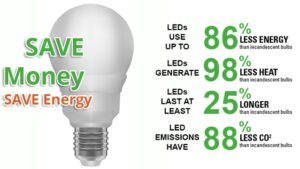
That leads many Colorado homeowners to one of the most common questions we hear at The Electricians: Do LED lights save money?
The short answer is yes.
The longer answer is absolutely yes, and the cost savings continue for years.
As one of the most trusted electrical service teams in Colorado, we help homeowners replace outdated lighting every day.
Below, you will learn how much LEDs can actually save, what makes them so energy efficient, whether they impact your electricity bill, what they cost to run, and what downsides you should know before switching.
What Are LED Lights and Why Are They So Efficient?
Before we talk dollars, let’s talk science.
LED stands for Light Emitting Diode. Unlike incandescent bulbs that heat a filament until it glows (basically a tiny toaster), LEDs produce light through a completely different process that uses far less energy and generates much less heat.
That efficiency is where the money-saving magic begins.
Why LEDs Use Less Electricity
LED lights do not waste energy creating heat, so almost all the power they pull goes toward producing usable light. This makes them:
- Up to 80 percent more efficient than traditional incandescent bulbs
- Typically 40 to 60 percent more efficient than CFLs
- Longer lasting by tens of thousands of hours
So when someone asks “Does LED lights save electricity?” the real answer is:
Yes, dramatically.
Do LED Lights Save Money?
Let’s get to the main question.
Yes, LED Lights Save Money in Three Big Ways
- Lower energy consumption
- Longer lifespan
- Reduced replacement and maintenance costs
When you combine all three, LEDs are one of the quickest and most affordable home upgrades that begin paying for themselves almost immediately.
How Much Can You Save?
Let’s compare an average 60-watt incandescent bulb to a 9-watt LED bulb that produces the same brightness.
- Incandescent: Uses 60 watts
- LED: Uses about 9 watts
If you replaced twenty 60-watt bulbs in your home with LEDs, that drops your lighting energy usage from 1,200 watts to 180 watts.
Yes, you read that right. Almost a 1,000-watt difference.
For Colorado homeowners dealing with winter heating bills, summer AC usage, and general rising energy prices, LED lighting is one of the smartest ways to cut energy consumption fast.
Do LED Lights Run Up Your Electricity Bill?
This question comes up more than you might think, usually because someone sees the price tag on LEDs and wonders if there is a catch.
Luckily, there is no catch.
LED lights do not run up your bill. They actually reduce it. Because they use a fraction of the electricity that incandescent bulbs do, every hour an LED bulb is on, you are paying dramatically less to power it.
The only way LED lights could increase your bill is if you installed a thousand of them and left them on day and night. And if that is your plan, well, we should probably talk.
How Much Does It Cost to Run an LED Light for 24 Hours?
This is where you see just how efficient LED lighting truly is.

Let’s use a standard 9-watt LED bulb.
Step-by-step:
- 9 watts = 0.009 kWh (kilowatt-hours) per hour
- Multiply by 24 hours = 0.216 kWh per day
- The average electricity rate in Colorado is roughly 14 cents per kWh
- That equals about 3 cents per day to run one LED bulb continuously
So if you wanted to leave an LED on for an entire day, it would cost about three cents.
Want to leave it on for a month? You are still spending less than one dollar.
Compare this to a 60-watt incandescent bulb, which would cost over 20 cents per day. Multiply that across all the lights in your home, and LEDs begin saving you real money very quickly.
What Is the Downside of LED Lights?
LEDs are great, but nothing is perfect. Here are the downsides homeowners should know.
1. Higher upfront cost
LED bulbs usually cost more than incandescent or CFL bulbs.
However, because LEDs last so much longer, the lifetime cost is still cheaper.
2. Not all LEDs work well with older dimmer switches
LEDs require LED-compatible dimmers.
If your lights flicker, buzz, or do not dim smoothly, the dimmer switch is usually the issue.
(Pro tip: We can upgrade your dimmer so your LED experience is smooth and flicker-free.)
3. Cheap LEDs can have poor color quality
Some low-quality bulbs give off odd tinting, uneven lighting, or an unpleasant bluish glow.
Stick to reputable brands or ask us for recommendations.
Here are some recommendations for light bulbs for every home.
4. Some LEDs can produce directional light
Certain LED styles are more focused, which is great for recessed lighting but not ideal for every fixture.
Choosing the right bulb type solves this problem.

Overall, the downsides are minor and easy to avoid with the right lighting design.
Why Colorado Homeowners See Even Bigger Savings with LEDs
Because Colorado has:
- Long winter nights
- Seasonal weather requiring more indoor lighting
- Rising electricity costs
- Many homes with older lighting systems
Switching to LED lights can create noticeable savings throughout the year.
If you have ever thought about installing recessed lighting, cabinet lighting, or a full interior or exterior lighting installation, choosing LED fixtures maximizes efficiency and lowers long-term costs.
How Long Do LED Lights Last?
Most LED bulbs last 15,000 to 25,000 hours.
That is roughly:
- 10 years at 6 hours per day
- 20 years at 3 hours per day
Meanwhile, incandescent bulbs last around 1,000 hours.
This is why you spend less money replacing bulbs and more time enjoying reliable lighting.
Are LEDs Worth It?
Absolutely.
Between lower energy use, longer life, and dramatically reduced electricity costs, LED lighting remains one of the easiest ways for homeowners to save money.
And if you want even bigger savings, pairing LEDs with smart dimmers and modern lighting design can reduce energy consumption even further.
As always, lighting is one of the things we do best. If you want help upgrading your home lighting system or installing new, efficient LED fixtures, we are here to help.
Frequently Asked Questions
Do LED lights save electricity?
Yes. LEDs use about 80 percent less electricity than incandescent bulbs and significantly less than CFLs.
Do LED lights run up your electricity bill?
No. They do the opposite. LED lighting reduces your energy usage and lowers monthly bills.
How much does it cost to run an LED light for 24 hours?
About three cents per day for a standard 9-watt LED bulb in Colorado.
What is the downside of LED lights?
Higher upfront cost, compatibility issues with old dimmers, poor color quality in cheap bulbs, and occasionally directional lighting. All are easy to avoid or fix.
Do LED light bulbs really save money?
Yes. Between reduced energy consumption and fewer replacements, LEDs save money from the first month onward.
Final Thoughts
LED lighting is one of the simplest and smartest upgrades any Colorado homeowner can make. Whether you want to update old fixtures, brighten your kitchen, add exterior lighting, or design a full lighting upgrade, The Electricians can help you build a more efficient, beautiful, and cost-effective home.
Ready to upgrade to energy efficient LED lighting?
Schedule a free estimate with The Electricians today. Our experts handle interior lighting, exterior lighting, recessed lighting installs, and energy-saving home upgrades across Colorado.
Related Posts
If you enjoyed reading this, then please explore our other articles below:

Electrical Panels in Colorado Homes
Many homes across Colorado, especially in Denver, Aurora, Lakewood, and Colorado Springs, were built with electrical panels that were never designed for modern power demands. Cold winters, EV charging, home offices, and newer appliances place added stress on older panels and breakers.
If you are noticing frequent breaker trips, buzzing sounds, or planning an upgrade like an EV charger or heat pump, a licensed Colorado electrician can evaluate whether your panel needs repairs or a full power upgrade.