
Contents
- Why Spring Storms Stress Your Electrical System
- Quick Answer: How to Protect Your Home from Electrical Surges
- What Happens During a Power Surge?
- Do Modern Houses Need Surge Protectors?
- Why Grounding Systems Matter in Colorado
- How to Save from Electrical Shock in Rainy Season
- Signs Your Electrical System Is Not Storm Ready
- Understanding Electrical Loads in Spring
- Storm Season Preparation Checklist for Colorado Homes
- What Happens If You Ignore Storm Preparation?
- When to Call an Emergency Electrician
- Frequently Asked Questions
- Why Colorado Homeowners Trust The Electricians
- Final Thoughts
Trusted Colorado Electricians
Spring in Colorado means warmer days, longer evenings, and powerful thunderstorms rolling across the Front Range. While most homeowners think about roof damage or fallen branches, your home’s electrical system often takes the biggest hit during storm season.
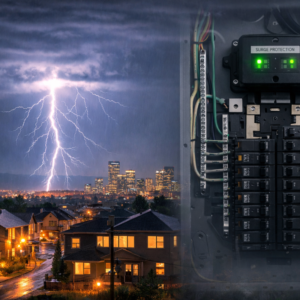
Lightning strikes, heavy rain, saturated soil, and rapid temperature swings can disrupt the flow of electricity, overload circuits, and create dangerous ground faults.
If your system is not prepared, a single storm can lead to damaged wiring, repeated breaker trips, or even electrical shock hazards.
Here is what every Colorado homeowner should know before peak storm season hits.
Why Spring Storms Stress Your Electrical System
During a thunderstorm, several electrical risks happen at once:
- Lightning creates a massive power surge.
- Utility companies may cycle power during outages.
- Rapid power restoration causes voltage spikes.
- Water intrusion increases the risk of ground faults.
- Heavy electrical loads strain aging components.
Your electrical panel distributes electricity throughout your home. When lightning strikes nearby, excess voltage attempts to travel through your electrical circuit. If your grounding systems are outdated or insufficient, that surge can damage appliances, wiring, and even the panel itself.
Even small voltage spikes weaken components over time. That is why circuit breakers trip more often during storm season. It is not random. It is your system trying to protect itself.
Quick Answer: How to Protect Your Home from Electrical Surges
If you want the fast checklist:
- Install whole-home surge protectors.
- Inspect grounding systems.
- Test GFCI outlets.
- Evaluate electrical loads.
- Check for damaged wiring.
- Schedule an inspection with licensed electricians.
Now let us explain why each step matters.
What Happens During a Power Surge?
A power surge is a sudden spike in voltage that disrupts how electricity flows through your home.
Normally, electricity flows at a steady voltage through wiring and circuits. During a storm, lightning or grid fluctuations from utility companies can send thousands of extra volts through the system in a fraction of a second.
When that happens:
- Sensitive electronics burn out.
- Breakers or fuses may fail.
- Electrical wiring insulation can degrade.
- Appliances experience premature failure.
- Circuit boards inside modern devices get damaged.
A whole-home surge protector absorbs or redirects that excess voltage before it spreads through the house.
Without it, your panel becomes the first line of defense. That is expensive.
Do Modern Houses Need Surge Protectors?
Yes. In fact, a modern home may need surge protection more than older homes.

Today’s homes contain:
- Smart thermostats
- EV chargers
- High-efficiency HVAC systems
- Kitchen appliances with circuit boards
- Home office equipment
- Security systems
All of these depend on stable voltage. Even small surges weaken them over time.
Are New Houses Built With Surge Protectors?
Some are, but many are not.
Recent code updates require surge protection in certain new residential installations. However, homes built before those updates often lack whole-home surge protectors.
Even if a surge device is installed, not all systems offer strong protection. A professional inspection ensures your home is properly protected and compliant with modern electrical safety standards.
Why Grounding Systems Matter in Colorado
Your grounding systems are critical during storm season.
Grounding directs excess electricity safely into the earth. Without proper grounding, voltage has nowhere to go. That increases the risk of electrical shock, damaged panels, and electrical fires.
Colorado’s soil conditions and freeze-thaw cycles can loosen or corrode grounding rods over time. If grounding systems degrade, the protection level drops.
A storm inspection should always include a grounding evaluation.
How to Save from Electrical Shock in Rainy Season
Electrical shock risk increases when moisture interacts with energized systems.
Here is how to reduce risk:
Test GFCI Outlets
GFCI outlets are designed to detect ground faults and shut off power instantly. They protect bathrooms, kitchens, garages, and outdoor areas.
Press the test button, then reset. If it does not reset, call licensed electricians immediately.
Avoid Wet Contact
Never handle electrical devices with wet hands. Keep cords elevated. Water and energized wiring are a dangerous combination.
Inspect Outdoor Wiring
Cracked conduit, exposed electrical wiring, or damaged covers increase shock risk.
Turn Off Power in Flooded Areas
If flooding affects your basement or garage, shut off power at the panel only if it is safe to do so. If unsure, call a professional.
Electrical safety is not optional during storm season.
Signs Your Electrical System Is Not Storm Ready
Your system may already be warning you.

Watch for:
- Flickering lights during storms
- Circuit breakers trip repeatedly
- Breakers or fuses blowing unexpectedly
- Warm outlets
- Burning smells
- Rust inside the panel
- Visible damaged wiring
Frequent breaker trips often signal overloaded circuits or weak components. Storm season increases electrical loads because HVAC systems, sump pumps, and dehumidifiers work harder.
If circuit breakers trip often, your panel may not be properly balanced to distribute power efficiently. It may be time to upgrade outdated panels.
Understanding Electrical Loads in Spring
Spring weather creates unpredictable electrical loads.
Heating systems may still run at night. Air conditioning may kick on during the day. Add appliances, EV charging, and work-from-home setups, and your electrical circuit demand increases significantly.
If your panel struggles to distribute electricity evenly, breakers will trip as a safety mechanism.
An inspection helps ensure your home can handle seasonal load changes safely.
Storm Season Preparation Checklist for Colorado Homes
Here is your proactive plan:
Schedule a Professional Electrical Inspection
- Inspect grounding systems
- Evaluate surge protection
- Check for damaged wiring
- Test GFCI outlets
- Assess panel condition
- Confirm safe electrical loads
This small investment provides major peace of mind.
Install Whole-Home Surge Protectors
This is the most effective protection against lightning-related power surge damage.
Upgrade Aging Panels
Older panels struggle to distribute power efficiently. Storms expose weaknesses quickly.
Secure Outdoor Components
Strong winds can loosen service masts or pull on overhead lines. Utility companies restore power quickly, but internal damage remains your responsibility.
What Happens If You Ignore Storm Preparation?
You risk:
- Appliance failure
- Electrical fires
- Electrical shock
- Panel damage
- Expensive emergency repairs
Lightning claims in Colorado are common. Whole-home surge protectors cost far less than replacing modern electronics.
Storm protection is not an upgrade. It is responsible homeownership.
When to Call an Emergency Electrician
Contact professionals immediately if you notice:
- Partial power loss
- Burning smells
- Water near the electrical panel
- Sparks
- Buzzing sounds
- Breakers that will not reset
The Electricians are known throughout the Denver metro area as trusted emergency specialists. When severe weather hits, fast response protects your home and your family.
Storm damage does not wait. Neither should you.
Frequently Asked Questions
Do modern houses need surge protectors?
Yes. A modern home contains sensitive electronics that require protection from power surge damage.
Are new houses built with surge protectors?
Some are due to newer code requirements, but many homes still lack whole-home surge protectors.
How to save from electrical shock in rainy season?
Test GFCI outlets, avoid contact with wet electrical devices, inspect exposed wiring, and call licensed electricians if flooding affects circuits.
Why do circuit breakers trip during storms?
Circuit breakers trip to protect against overloads, short circuits, or surge damage. Increased electrical loads and moisture can contribute.
How to protect your house from electrical surges?
Install whole-home surge protectors, maintain grounding systems, inspect panels, and schedule regular inspections.
Why Colorado Homeowners Trust The Electricians
Spring storms are unpredictable. Your electrical system should not be.
The Electricians serve the Denver metro area with:
- Whole-home surge protector installation
- Panel upgrades
- Storm damage repair
- Electrical inspections
- Emergency services
Our licensed electricians focus on electrical safety and long-term reliability. We help ensure your home stays protected before, during, and after storm season.
Because true peace of mind is knowing your system is built to handle Colorado weather.
Final Thoughts
Spring storms are inevitable. Electrical damage does not have to be.
Take proactive steps now to ensure your home is protected. Surge protection, grounding inspections, and professional evaluations prevent expensive repairs and dangerous failures.
Schedule a Free Estimate with The Electricians today and make sure your electrical system is ready before the next storm rolls in.
Related Posts
If you enjoyed reading this, then please explore our other articles below:

Electrical Panels in Colorado Homes
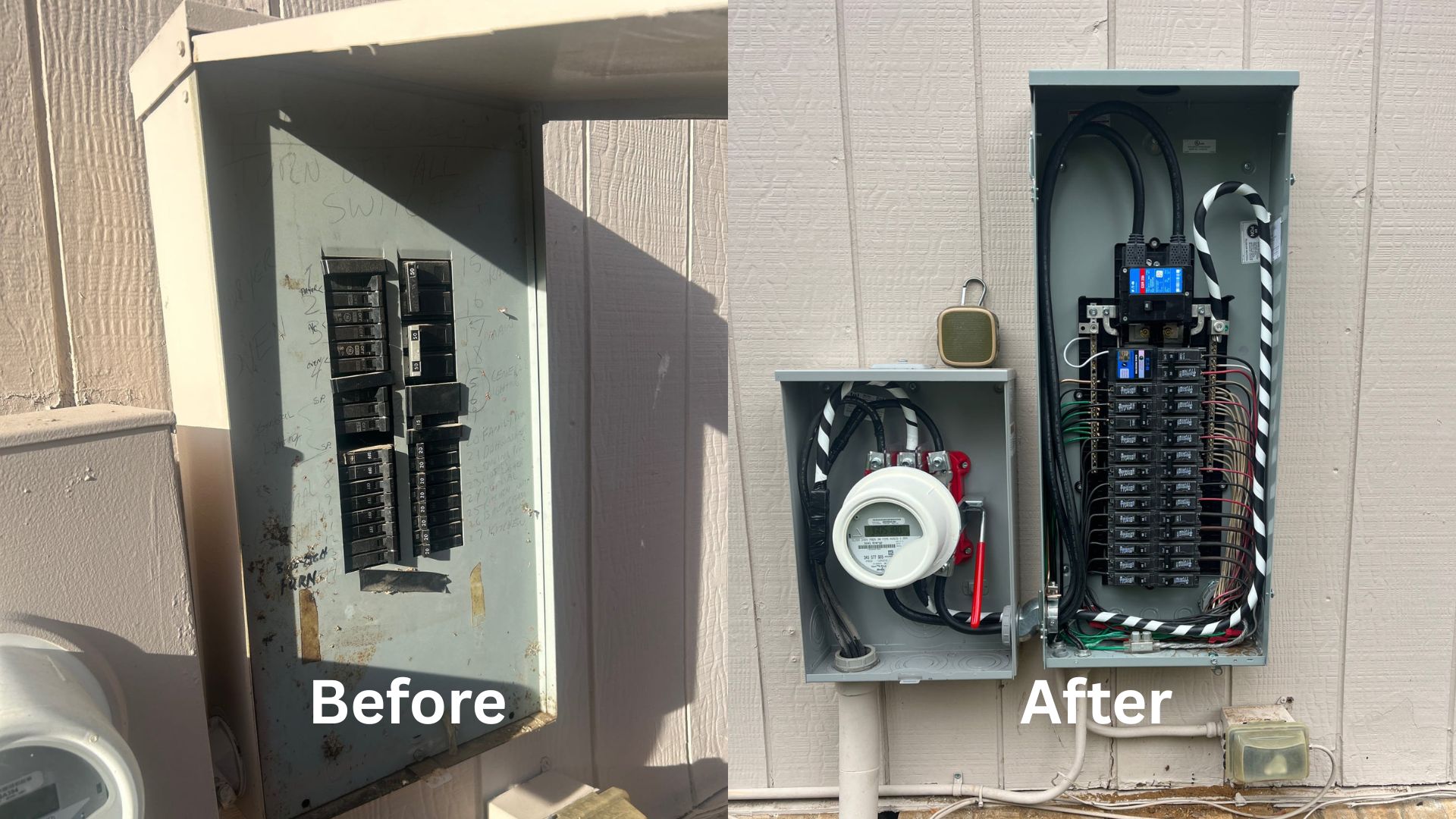
Many homes across Colorado, especially in Denver, Aurora, Lakewood, and Colorado Springs, were built with electrical panels that were never designed for modern power demands. Cold winters, EV charging, home offices, and newer appliances place added stress on older panels and breakers.
If you are noticing frequent breaker trips, buzzing sounds, or planning an upgrade like an EV charger or heat pump, a licensed Colorado electrician can evaluate whether your panel needs repairs or a full power upgrade.