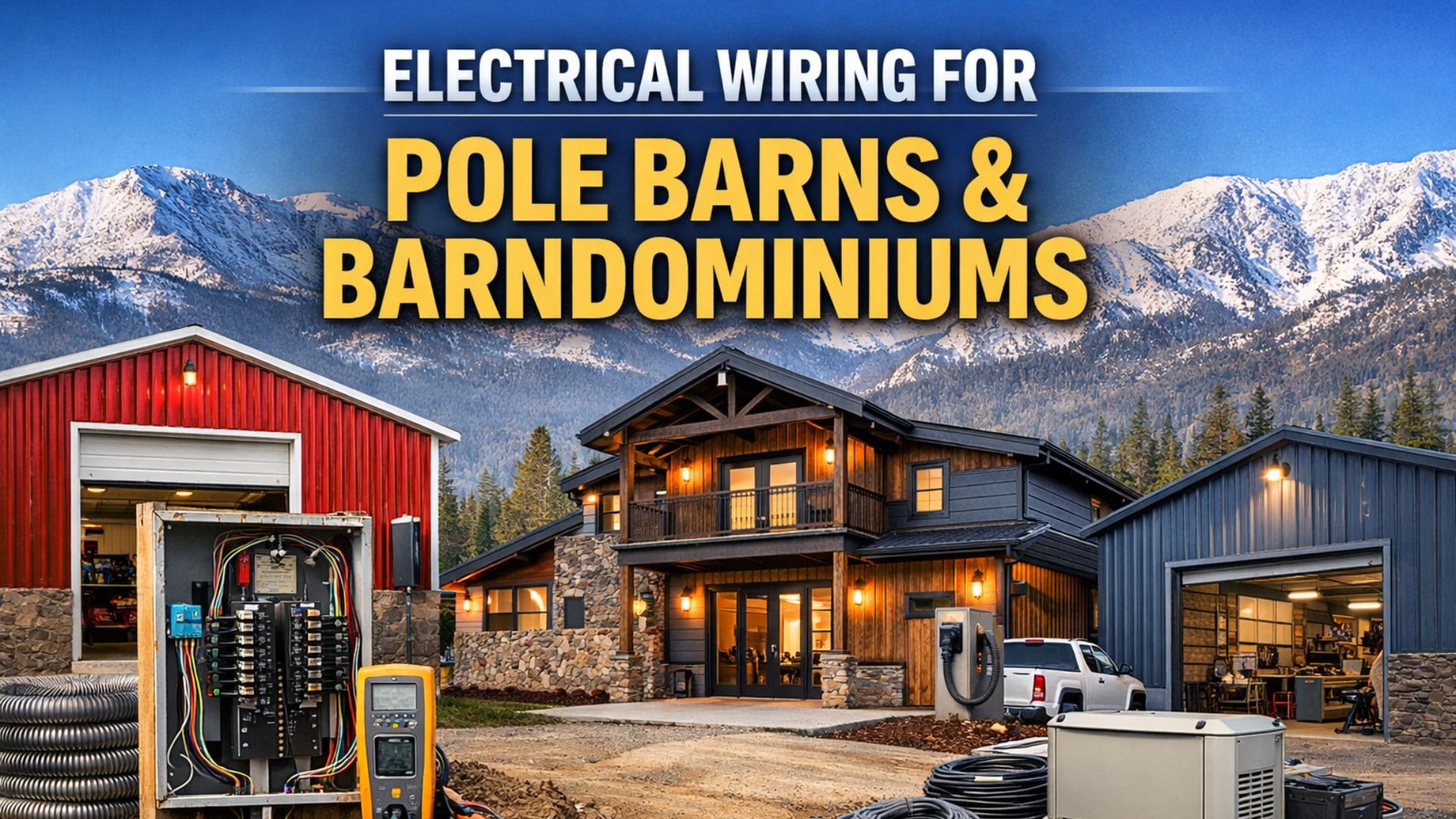
Pole barns, barndominiums, and steel buildings continue to grow in popularity across Colorado. Homeowners are building a pole barn for workshops, storage, livestock, home offices, and even full residential conversions.
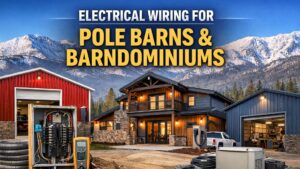
While the framing and exterior design often get the attention, the electrical system behind the structure determines how functional, safe, and future proof it will be.
Whether you plan a workshop in Parker or a barndominium in Castle Rock, your electrical planning will directly affect safety, inspections, and long term performance. Proper pole barn electrical wiring requires more than running a few outlets. It demands load calculations, grounding, code compliance, and careful coordination with local building codes.
This guide explains the electrical requirements for a pole barn, barndominium electrical considerations, and what you should know before wiring a steel building in Colorado.
What Is Pole Barn Electrical Wiring?
Pole barn electrical wiring refers to the complete electrical system installed in a detached post frame structure. This includes:
- A feeder from the main service panel
- A subpanel or service panel inside the building
- Branch circuits and circuit breakers
- Light fixtures and switches
- GFCI and AFCI protection
- Grounding and bonding systems
- Properly installed electrical boxes
Because most pole barns are detached buildings, code requires a dedicated feeder and proper grounding system. You cannot simply extend an extension cord from the house and call it finished electrical work.
Electrical Requirements for Pole Barn Structures
The electrical requirements for a pole barn depend on how you intend to use the space.
A basic storage building may only need lighting and a few receptacles. A workshop with power tools will require multiple 120 volt circuits and dedicated 240 volt circuits for equipment such as welders or air compressors.
If you are converting the structure into living space, the electrical system must meet full residential standards.
Barndominium electrical systems typically require:
- 200 amp service in many cases
- Dedicated kitchen appliance circuits
- HVAC circuits
- Laundry circuits
- Smoke and carbon monoxide detection
- Exterior lighting
- Surge protection
- Energy efficient lighting design
Before installing any wiring, you must perform a load calculation. Many homeowners assume their existing service panel can support the additional load. In reality, adding a steel building or barndominium often pushes older electrical panels beyond safe capacity.
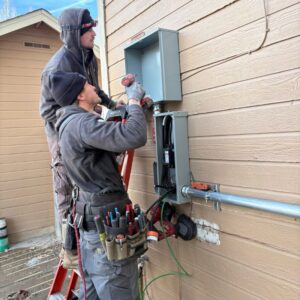
At The Electricians, we calculate the total demand of the structure and compare it to your available amperage. If your system lacks capacity, we recommend a properly sized service upgrade or subpanel.
How to Wire a Pole Barn Safely
Many people search for how to wire a pole barn. While DIY guides exist, pole barn electrical installations involve more complexity than most homeowners expect.
When wiring a detached building, you must:
- Size the feeder conductors correctly
- Account for voltage drop over long distances
- Install conduit at proper burial depth
- Separate neutral and ground bars in the subpanel
- Install a grounding electrode system with a ground rod
- Provide GFCI protection where code requires it
- Follow local codes and regulations
If your barn sits 200 feet from the house, voltage drop becomes a serious design factor. Undersized conductors cause overheating and equipment malfunction. A professional electrician calculates conductor size based on amperage and distance to prevent those problems.
Colorado local building codes also require proper permits and inspections. Skipping this step can delay resale or create insurance complications later.
Wiring a Steel Building Requires Special Grounding
Wiring a steel building requires special attention to bonding and grounding. Steel framing and metal siding conduct electricity. If you do not bond these components correctly, the structure can energize during a fault.
A licensed electrician connects all metallic components to the grounding system. This ensures that circuit breakers trip immediately if a fault occurs. Proper bonding protects anyone touching the building and reduces the risk of electrical shock.
Installing a ground rod and verifying continuity throughout the structure are not optional steps. The National Electrical Code and Colorado local codes and regulations enforce these standards to protect property owners.
Subpanels and Service Panels for Detached Buildings
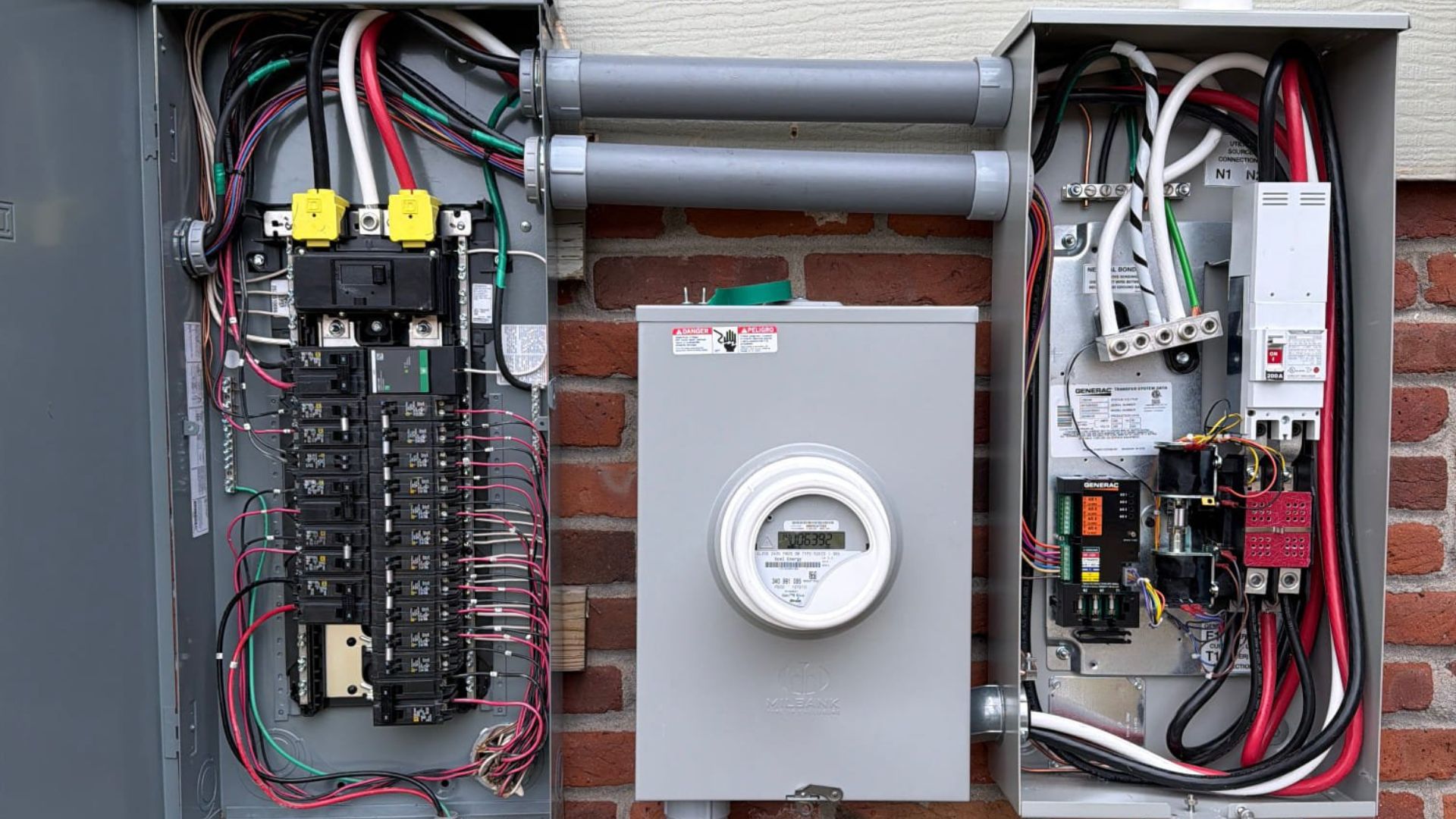
Most pole barn electrical installations require a subpanel inside the detached structure. The feeder from the main service panel supplies this subpanel.
Inside the detached building, the code requires that you isolate neutral and ground conductors. The subpanel must include properly sized circuit breakers and clearly labeled circuits. Installing separate ground and neutral bars ensures safe fault clearing.
In larger barndominium projects, it may make sense to install a separate service panel with its own meter. The right approach depends on:
- Distance from the primary structure
- Total electrical load
- Planned equipment
- Future expansion
- Generator installation plans
We evaluate these factors before recommending the most efficient and code compliant design.
Lighting Design and Energy Efficiency
Lighting often defines how functional a pole barn becomes. High ceilings require careful light fixture placement to eliminate shadows. Workshops benefit from bright, evenly distributed LED fixtures. Residential barndominiums require layered lighting for kitchens, bedrooms, and living areas.
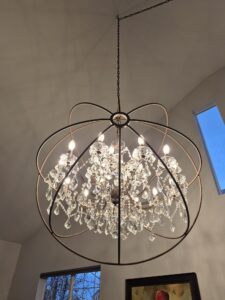
Energy efficient LED light fixtures reduce operating costs and improve visibility. Proper switch placement and zoning give you control over different sections of the building. Installing additional electrical boxes during rough in makes future upgrades simple.
Planning lighting early prevents expensive rewiring after insulation and drywall are complete.
Ground Fault Protection and Safety Devices
Workshops and agricultural buildings expose electrical systems to dust, moisture, and heavy equipment. For that reason, code requires a ground fault circuit interrupter in many locations.
A ground fault circuit interrupter monitors current flow and disconnects power instantly when it detects imbalance. This protects people from shock hazards around concrete floors, sinks, or exterior receptacles.
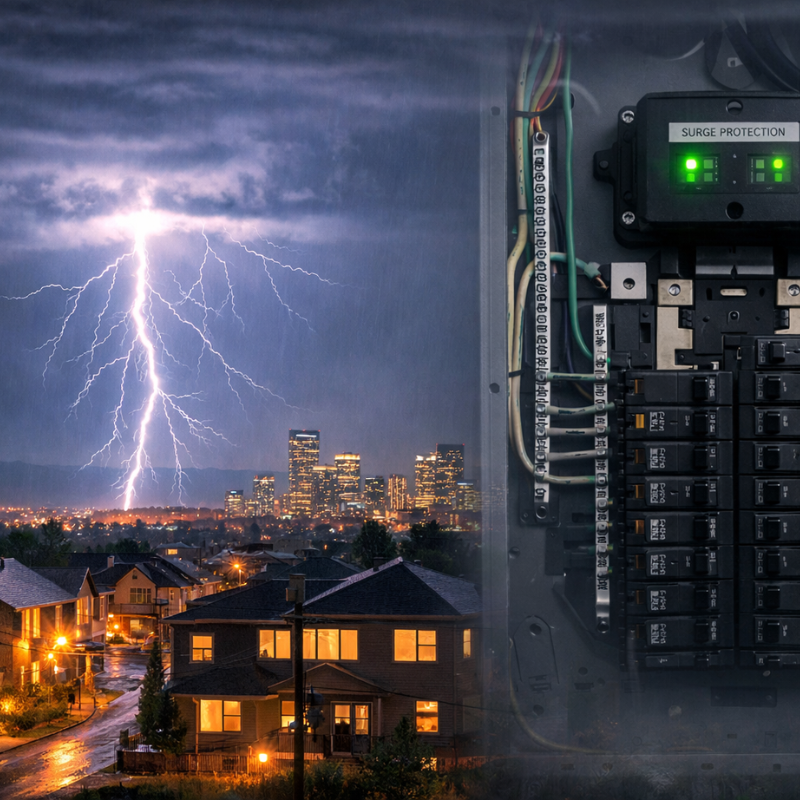
Modern electrical panels also support whole building surge protection. This protects sensitive electronics, HVAC systems, and tools from voltage spikes.
Safety devices are not upgrades. They are essential components of a reliable electrical system.
Generator Integration for Pole Barns and Barndominiums
Many Colorado property owners rely on wells, freezers, or livestock equipment located in detached buildings. Power outages can create serious disruption.
Planning for generator installation during construction simplifies the process. A transfer switch integrates directly into the service panel or subpanel. When the utility loses power, the generator supplies electricity safely and automatically.
Including generator capacity in your original load calculation prevents undersizing and avoids costly retrofits later.
Why You Should Hire a Licensed Electrician
Pole barn electrical projects involve trenching, feeder sizing, bonding, grounding, and compliance with local building codes. Mistakes can create fire hazards, failed inspections, or insurance complications.
A licensed electrician understands the electrical requirements for pole barn construction and wiring a steel building safely. A professional electrician secures permits, coordinates inspections, and installs the system according to code.
Electrical work completed without permits can reduce property value and delay closings. Investing in proper installation protects your long term investment.
Work With The Electricians for Your Colorado Project
If you are building a pole barn, planning barndominium electrical systems, or wiring a steel building in Colorado, The Electricians provide complete design and installation services.
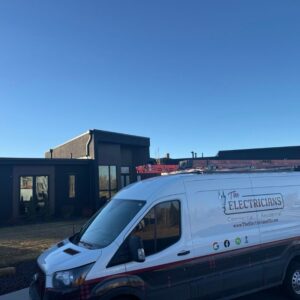
We handle:
- Pole barn electrical wiring
- Full barndominium electrical systems
- Subpanels and service panel installations
- Electrical panels and circuit breakers
- Generator installation
- Ground rod installation and bonding
- Energy efficient lighting design
- Code compliant inspections
We understand trenching distances, voltage drop calculations, grounding requirements, and Colorado local codes and regulations. Our team designs electrical systems that meet inspection standards and support long term performance.
If you plan new construction or converting an existing structure, contact The Electricians to discuss your project with a licensed electrician who understands pole barn electrical systems.
Working with the Right Metal Building Partner
If you are planning a pole barn or steel building, the structure and electrical system should be designed together. We often coordinate with Mammoth Metal Buildings, a Colorado-based company specializing in metal building design and project management for agricultural, commercial, and residential projects.
You can learn more about their work at Mammoth Metal Buildings.
Related Posts
If you enjoyed reading this, then please explore our other articles below:
Electrical Panels in Colorado Homes
Many homes across Colorado, especially in Denver, Aurora, Lakewood, and Colorado Springs, were built with electrical panels that were never designed for modern power demands. Cold winters, EV charging, home offices, and newer appliances place added stress on older panels and breakers.
If you are noticing frequent breaker trips, buzzing sounds, or planning an upgrade like an EV charger or heat pump, a licensed Colorado electrician can evaluate whether your panel needs repairs or a full power upgrade.