
Electric vehicles are everywhere across Colorado. From Teslas in Denver to Rivians in Castle Rock, EV adoption continues to accelerate — and with it comes a question homeowners ask more often: What is EV thermal runaway, and should I be worried about charging at home?
The short answer is that thermal runaway is real but statistically rare, and the fire risk most Denver homeowners actually face is not inside the battery at all — it is in their home’s electrical system.
Outdated panels, undersized wiring, and improper installations cause far more home charging incidents than spontaneous battery failures. This guide explains both risks clearly, so you know what to actually worry about and what to do.
What Is EV Thermal Runaway?
Thermal runaway is a chain reaction inside a lithium-ion battery where rising heat triggers chemical reactions that generate even more heat. Once started, the process accelerates faster than the battery’s cooling systems can respond.
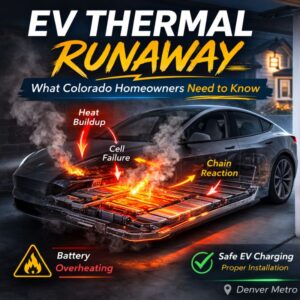
It is not an explosion. It is a cascading heat event that begins with a single battery cell failing — from physical damage, a manufacturing defect, or extreme overheating — and then spreads to neighboring cells. In extreme cases it produces smoke, flammable gas release, and fire.
Modern EVs are designed with battery management systems and thermal containment that monitor cell temperature and voltage continuously, isolating failing cells before the cascade can spread.
One meaningful safety difference from gasoline fires: EV battery management systems typically trigger a warning alarm when the first cell fails, giving occupants time to exit before the pack fully ignites. A 2021 study and data from EV FireSafe — which tracks battery fire incidents globally — found that in all incidents where drivers and passengers were not injured in a collision, they were able to exit the vehicle before it became fully involved in fire.
That warning window does not exist with a gasoline fuel system fire.
How Often Do EVs Actually Catch Fire?
This is the question people most want answered — and the data is unambiguous, even if the headlines are not.
Gas-powered vehicles catch fire at a rate of approximately 1,530 per 100,000 vehicles sold. Battery electric vehicles catch fire at a rate of approximately 25 per 100,000. That is a 60-to-1 difference, drawn from National Transportation Safety Board and Bureau of Transportation Statistics data.
Sweden’s national fire authority, which maintains some of the most rigorous per-vehicle fire tracking in the world, found that combustion-engine cars were more than 20 times more likely to catch fire than EVs in 2022.
EV fires receive disproportionate media coverage for two reasons: the technology is new and unfamiliar, and lithium-ion battery fires are operationally complex for first responders. Neither of those facts makes them more common. They make them more visible.
A 2023 Battelle investigation for the U.S. National Highway Traffic Safety Administration concluded that fire propensity involving lithium-ion systems is comparable to, or lower than, that of gasoline vehicles.
One noteworthy data point for Colorado Tesla owners specifically: Tesla reported that between 2012 and 2023, one Tesla fire event occurred for every 130 million miles traveled. The NFPA’s data for the same period shows one vehicle fire of any fuel type in the U.S. for every 17 million miles. Tesla’s fleet fire rate is roughly 7.6 times lower than the national vehicle average.
What Actually Causes Thermal Runaway?
The primary causes of EV thermal runaway — in order of frequency — are severe physical damage from a collision, manufacturing defects in battery cells, and extreme sustained overheating. For the vast majority of homeowners charging overnight in a garage, none of these apply under normal conditions.
The factor most within a homeowner’s control is the charging setup itself. Poor electrical installation does not directly cause thermal runaway inside the battery, but it can create unsafe charging conditions — heat stress on wiring, overloaded circuits, and connection failures that degrade charging quality over time. This is the risk that matters most for Denver homeowners, and it is entirely preventable.
Is It Safe to Leave My EV Plugged In Overnight?
Yes — with two conditions: proper equipment and proper infrastructure.
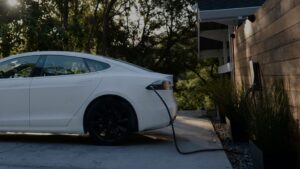
Modern EVs stop drawing current when fully charged, continuously monitor battery temperature, and manage current flow automatically. Leaving a properly installed Level 2 charger connected overnight is how the majority of EV owners charge and is the method manufacturers recommend.
The qualifier is your home’s electrical system. If your home has any of the following, overnight charging warrants a professional evaluation before you begin:
- A Federal Pacific or Zinsco electrical panel — both have documented histories of breaker failure and are common in Denver-area homes built before 1985. Learn more about FPE and Zinsco panel risks in Denver.
- A 100-amp service panel — older homes with 100-amp service may not have adequate capacity for a 240V Level 2 charger alongside existing household loads.
- No dedicated circuit for the charger — plugging an EV charger into a shared circuit is the single most common installation error and a leading cause of home charging-related electrical problems.
- Wiring older than 40 years that has never been inspected — aluminum branch circuit wiring common in 1960s–1970s homes has different load characteristics than modern copper wiring.
The 80% Charging Rule: Does It Reduce Fire Risk?
Most EV manufacturers recommend setting your daily charge limit to 80% rather than 100%. The reason is battery longevity, not fire prevention: lithium-ion cells experience more chemical stress when consistently held at full charge, which degrades capacity faster over time.
The 80% rule extends the useful life of your battery pack and reduces long-term heat stress on cells. It does not meaningfully reduce thermal runaway risk under normal conditions — that risk is already very low. Reserve 100% charges for long road trips when you need maximum range. For daily commuting and errands, 80% is the right default.
The Real Risk for Denver Homeowners: Your Electrical Infrastructure
Here is the honest picture: most EV-related home incidents are not thermal runaway events. They are electrical fires caused by the home’s wiring, not the vehicle’s battery.
Overloaded circuits, undersized wiring, loose connections at the panel, and EV chargers installed without dedicated circuits are the causes that actually show up in fire department reports.
This is especially relevant in the Denver metro area, where a significant percentage of the housing stock was built in the 1960s and 1970s — precisely the era when Federal Pacific and Zinsco panels were standard installations, and when homes were wired for electrical loads a fraction of what a modern household with an EV, multiple HVAC systems, and smart home devices actually draws.
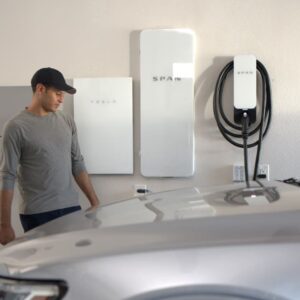
A Level 2 EV charger pulls 30–50 amps on a dedicated 240V circuit — continuously, for 6–10 hours overnight. That is a significant sustained load. A panel that was marginal before you added an EV becomes genuinely problematic after.
And a panel with defective breakers — like the Stab-Lok breakers in Federal Pacific panels that fail to trip during overloads — creates a specific, documented hazard when paired with a high-draw overnight charging circuit.
Colorado Climate and EV Charging: What to Know
Colorado’s climate creates a few specific considerations for EV owners that homeowners in milder climates do not face.
Cold winters temporarily reduce battery range and efficiency but do not increase thermal runaway risk under normal charging. Most EVs preheat the battery pack before charging in cold conditions, which draws some additional power but is a designed behavior. Parking in a heated or insulated garage helps maintain range in Denver winters and is fine from a safety standpoint with a properly installed charger.
Summer heat combined with poor garage ventilation is a more relevant concern. Colorado’s Front Range regularly sees garage temperatures exceeding 100°F in July and August. Charging a warm battery in a poorly ventilated garage adds thermal load. This does not commonly cause thermal runaway, but it is a reason to charge during cooler overnight hours rather than immediately after a summer drive, and to ensure your garage has at least passive airflow.
Altitude has no meaningful effect on battery chemistry or thermal runaway risk under normal driving and charging conditions.
Practical Steps to Reduce Home EV Charging Risk
You cannot eliminate all risk — but for home EV charging, the controllable risks are well understood and straightforward to address:
Have your panel evaluated before installation. Know your panel’s capacity, age, and brand before adding a 30–50 amp circuit. If your home has a Federal Pacific or Zinsco panel, replace it before installing an EV charger. This is not optional — it is the foundational safety step.
Install a dedicated 240V circuit. Your EV charger should have its own circuit — not share one with other appliances. This is the single most important installation requirement and the step most often skipped in DIY installations.
Use manufacturer-approved charging equipment. Never use a non-certified charger or an extension cord for Level 2 charging. Use the charger provided or approved by your vehicle manufacturer, or a UL-listed Level 2 unit from a reputable brand.
Set your daily charge limit to 80%. Use your vehicle’s app or onboard settings to cap regular charging at 80%. Reserve full charges for long trips. This extends battery life and keeps cells operating in their optimal thermal range.
Install a smoke detector in your garage if you don’t have one. Colorado code does not always require garage smoke detectors, but they are a sensible addition for any garage with an EV charger. Early detection is the most important factor in fire outcomes.
Schedule an electrical inspection if your home is pre-1985. If you have never had a licensed electrician evaluate your panel, wiring, and grounding, adding an EV charger is a good occasion to do it. A panel inspection takes about 20 minutes and costs nothing with The Electricians.
Frequently Asked Questions
Ready to Charge With Confidence?
Whether you are installing a new EV charger or want to know if your panel can handle one, we start with a free in-home evaluation. Our licensed electricians serve the entire Denver metro area — and we handle permits, Xcel Energy coordination, and inspection so you don’t have to.
No obligation • Free written estimate • Financing available through GreenSky
The Electricians serve the entire Denver Metro Area: Denver • Centennial • Littleton • Highlands Ranch • Englewood • Aurora • Lakewood • Arvada • Parker • Castle Rock • Thornton • Westminster • Broomfield • Golden • Greenwood Village • Lone Tree • Colorado Springs and surrounding Front Range communities.
Related Posts
If you enjoyed reading this, then please explore our other articles below:
Electrical Panels in Colorado Homes
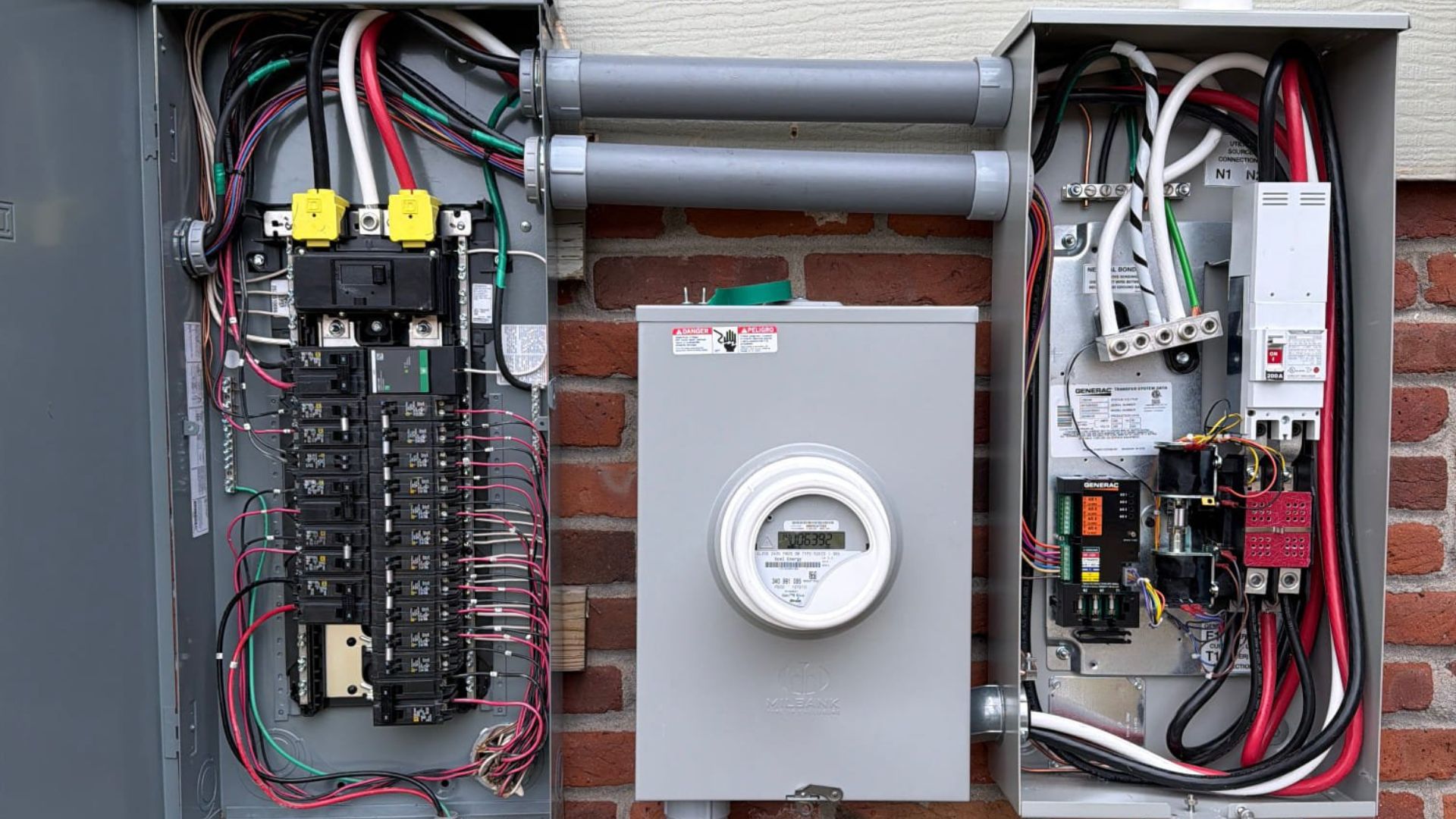
Many homes across Colorado, especially in Denver, Aurora, Lakewood, and Colorado Springs, were built with electrical panels that were never designed for modern power demands. Cold winters, EV charging, home offices, and newer appliances place added stress on older panels and breakers.
If you are noticing frequent breaker trips, buzzing sounds, or planning an upgrade like an EV charger or heat pump, a licensed Colorado electrician can evaluate whether your panel needs repairs or a full power upgrade.