Panel Capacity, New Circuits, and HEAR Rebates Explained
Upgrading to a heat pump is one of the smartest moves Denver homeowners can make. It lowers energy use, improves comfort year-round, and unlocks major rebates. But there is one critical piece many homeowners overlook: your electrical system must be able to handle it.
If your panel is undersized or already near capacity, a heat pump installation can stall or become unsafe. In fact, across the Denver metro area, a significant percentage of homes need some level of electrical upgrade before a heat pump can be installed properly.
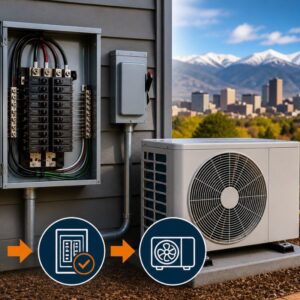
This guide breaks down everything you need to know about heat pump electrical requirements in Denver, including panel capacity, circuit sizing, permitting, and how to maximize rebates.
Why Electrical Capacity Matters for Heat Pumps
Heat pumps shift energy use from gas to electricity. That means your electrical panel takes on a larger role in powering your home’s heating and cooling.
A typical system includes:
- Outdoor condenser unit
- Indoor air handler or furnace integration
- Backup heat strips (in some systems)
- Smart thermostat and controls
Each of these components adds electrical demand. If your panel is already close to its limit, adding a heat pump can:
- Overload circuits
- Trip breakers frequently
- Create fire hazards
- Fail inspection
That is why evaluating electrical capacity for heat pump Colorado homes is step one before installation.
How Load Calculations Determine Panel Needs
Before recommending any upgrade, a licensed electrician performs a residential load calculation. This is not a guess. It follows National Electric Code guidelines and considers:
- Square footage
- Existing appliances
- HVAC systems
- EV chargers
- Hot tubs or large loads
- Future expansion
The goal is to determine your total electrical demand and whether your panel can safely handle it.
What We Often See in Denver Homes
- Older homes with 100 amp panels are usually maxed out
- Mid-range homes with 125 amp panels often lack space for new circuits
- Newer homes with 200 amp panels may still need upgrades depending on added loads
When 100A and 125A Panels Are Not Enough
Most homes built before the early 2000s fall into this category.
A 100 amp panel typically cannot support:
- Heat pump system
- Electric water heater
- EV charger
- Modern kitchen loads
Even a 125 amp panel can struggle once you add:
- Heat strips for backup heating
- Electric dryer
- Induction range
Clear Signs You Need a Panel Upgrade for a Heat Pump
- Panel is full with no breaker space
- Lights dim when large appliances run
- Frequent breaker trips
- Existing HVAC already pushes limits
In these cases, upgrading your panel is not optional. It is required for safety and code compliance.
When a 200 Amp Panel Is Enough
For many Denver homes, upgrading to 200 amp service solves the problem.
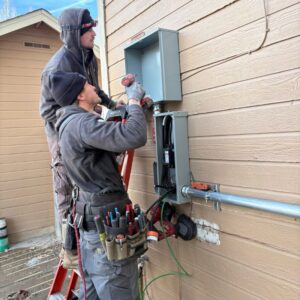
A 200 amp panel typically supports:
- Heat pump system
- Electric appliances
- EV charger (in many cases)
- Standard household loads
This is the most common upgrade we recommend and install.
When 200A Works Well
- Home under ~3,500 sq ft
- No large additional electrical loads planned
- No second EV charger
- Efficient heat pump system without large heat strips
When You May Need 320 Amp Service
Some homes require more than 200 amps, especially as electrification expands.
You may need 320 amp service if you have:
- Large custom home
- Multiple HVAC systems
- Two EV chargers
- Electric water heater and electric range
- Hot tub or sauna
- Future solar + battery storage plans
320 amp service provides additional capacity and future-proofs your home.
Dedicated Circuits for Heat Pumps
Heat pumps require dedicated circuits for safe and efficient operation. These are not shared with other appliances.
Outdoor Unit Circuit
- Typically 240V
- Breaker size: 20A to 60A depending on system
- Sized based on manufacturer specs
Indoor Air Handler
- May require 120V or 240V
- Often 15A to 60A depending on heat strips
Backup Heat Strips
- Can significantly increase electrical demand
- Often require large breakers (40A to 100A+)
This is where many homeowners underestimate the load. Backup heat strips can dramatically change your panel requirements.
Permits and Xcel Energy Coordination
In Denver and surrounding areas, electrical upgrades and heat pump installations require:
- Electrical permits
- Inspections
- Utility coordination
What Happens During a Panel Upgrade
- Load calculation and system design
- Permit submission
- Temporary power shutoff
- Panel replacement
- Inspection approval
- Utility reconnection
If you are upgrading service size, Xcel Energy must be involved. This can include:
- Upgrading the service line
- Transformer capacity checks
- Meter changes
Working with an experienced heat pump electrician in Denver ensures this process goes smoothly.
HEAR Rebates, Xcel Incentives, and Tax Credits
One of the biggest advantages of installing a heat pump right now is the available incentives.
HEAR Program (High-Efficiency Electric Home Rebate)
The HEAR program offers income-based rebates for electrification upgrades, including:
- Heat pumps
- Electrical panel upgrades
- Wiring improvements
This is a major opportunity because it can cover part of the electrical work, not just the HVAC system.
Xcel Energy Rebates
Xcel offers additional rebates for:
- Heat pump installation
- Energy efficiency upgrades
These vary based on system type and efficiency ratings.
Federal Tax Credits
You may also qualify for federal incentives under current energy programs, including:
- Tax credits for heat pump systems
- Potential credits for electrical upgrades tied to efficiency improvements
Stacking Rebates: How It Works
One of the most powerful strategies is stacking incentives.

A typical example:
- HEAR rebate reduces upfront cost
- Xcel rebate adds additional savings
- Federal tax credit lowers total tax liability
Realistic Scenario
- Heat pump system: $12,000
- Panel upgrade: $4,000
Potential savings:
- HEAR rebate: up to several thousand
- Xcel rebate: additional savings
- Federal tax credit: percentage of remaining cost
The result can reduce total project cost significantly.
The Clean Service Path: Heat Pump + Panel Upgrade
From a homeowner perspective, combining these upgrades makes sense:
- Evaluate electrical capacity
- Upgrade panel if needed
- Install heat pump
- Capture all available rebates
From a technical standpoint, doing both at once avoids:
- Rework
- Delays
- Permit complications
Why We Partner With HVAC Experts
Electrical work is only half of the equation. Proper system sizing and installation are just as critical.
That is why we coordinate closely with trusted HVAC professionals like Mountain Air Comfort Systems.
This ensures:
- Proper system design
- Correct electrical sizing
- Seamless installation
- Maximum rebate eligibility
Common Mistakes Homeowners Make
Skipping the Load Calculation
Leads to undersized systems or failed inspections.
Assuming Existing Panel Is Enough
Even newer homes can fall short.
Not Planning for Future Loads
EV chargers and electrification trends matter.
Missing Out on Rebates
Poor planning can disqualify you from incentives.
FAQ: Heat Pump Electrical Requirements in Denver
Do I need a panel upgrade for a heat pump?
Many homes do. If you have a 100A or 125A panel, an upgrade is likely required. A load calculation confirms this.
What size panel do I need for a heat pump?
Most homes need at least 200 amps. Larger homes or those with multiple electric systems may require 320 amp service.
How many circuits does a heat pump need?
Typically:
- One for the outdoor unit
- One for the indoor air handler
- Additional circuits for heat strips
Can I install a heat pump without upgrading my panel?
Sometimes, but only if your panel has enough capacity and space. Many Denver homes do not.
How long does a panel upgrade take?
Most upgrades are completed in one day, but coordination with Xcel can extend timelines.
Are panel upgrades covered by rebates?
Yes. The HEAR program can cover part of the cost, especially for qualifying households.
How do I know if my home qualifies for HEAR rebates?
Eligibility depends on income and project scope. Visit our HEAR Program page for details.
Can I combine rebates and tax credits?
Yes. Many homeowners stack HEAR, Xcel, and federal incentives to maximize savings.
Final Thoughts
Upgrading to a heat pump is a major step toward a more efficient, all-electric home. But success depends on having the right electrical infrastructure in place.
If you are considering a heat pump, start with a professional evaluation of your panel and electrical capacity. It is the foundation of a safe, efficient, and rebate-optimized installation.
Working with an experienced heat pump electrician in Denver ensures everything is done right the first time, from load calculations to final inspection.
Related Posts
If you enjoyed reading this, then please explore our other articles below:
Electrical Panels in Colorado Homes
Many homes across Colorado, especially in Denver, Aurora, Lakewood, and Colorado Springs, were built with electrical panels that were never designed for modern power demands. Cold winters, EV charging, home offices, and newer appliances place added stress on older panels and breakers.
If you are noticing frequent breaker trips, buzzing sounds, or planning an upgrade like an EV charger or heat pump, a licensed Colorado electrician can evaluate whether your panel needs repairs or a full power upgrade.