
Contents
- Outdoor Electrical Outlet Installation Denver: What Homeowners Need to Know
- Why Outdoor Electrical Code Matters
- Are Outdoor Outlets Required by Code?
- GFCI Requirements for Outdoor Electrical Outlets
- Understanding Modern Code Requirements
- Understanding Weatherproof Cover Ratings
- Can an Outdoor Outlet Be Added to an Existing Wall?
- Understanding Circuit Load Limits
- Avoid Permanent Use of Extension Cords
- Outdoor String Lights
- Landscape Lighting Installation
- Outdoor Kitchens and Backyard Entertainment
- Outdoor Outlets Near Air Conditioning Equipment
- Do You Need a Permit for an Outdoor Electrical Outlet Installation?
- Colorado Weather Makes Quality Installation Essential
- Signs Your Outdoor Electrical System Needs Service
- Why Hire a Licensed Electrician?
- Schedule Your Outdoor Electrical Outlet Installation in Denver
- Frequently Asked Questions
Trusted Colorado Electricians
Planning an outdoor electrical outlet installation Denver project?
Whether you’re adding a new patio, installing landscape lighting, powering an outdoor kitchen, or hanging string lights, understanding current code requirements can help you avoid safety hazards, failed inspections, and costly repairs.
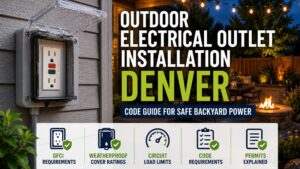
Outdoor electrical systems must withstand Colorado’s rain, snow, hail, intense sunlight, and temperature swings.
Because of these conditions, the National Electrical Code (NEC) and local Denver regulations have specific rules for GFCI requirements, weatherproof cover ratings, circuit load limits, and permits when adding exterior outlets.
Here’s what every Denver homeowner should know before starting an outdoor electrical project.
Outdoor Electrical Outlet Installation Denver: What Homeowners Need to Know
An outdoor electrical outlet installation is more than simply mounting a receptacle on an exterior wall.
A properly installed outdoor electrical outlet must be designed to safely handle moisture, weather exposure, and electrical demand while protecting your home’s occupants.
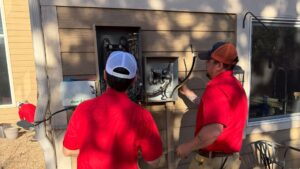
A licensed electrician will evaluate your electrical panel, determine whether the existing branch circuit has enough capacity, calculate the electrical load, and ensure the installation complies with current code requirements.
Why Outdoor Electrical Code Matters
Outdoor electricity presents different risks than indoor wiring.
Water dramatically increases the chance of electrical shock, damaged equipment, nuisance breaker trips, and even electrical fires. Proper installation helps protect both people and your home’s electrical system.
Professional installation also provides:
- Safe electrical access around patios, decks, and gardens
- Protection during Colorado thunderstorms
- Reliable outdoor power year-round
- Compliance with Denver inspections
- Proper grounding and bonding
- Long-lasting outdoor electrical equipment
Are Outdoor Outlets Required by Code?
Yes.
Current electrical code requirements generally require homes to have accessible outdoor receptacles.
Most homes need:
- At least one outdoor receptacle at the front of the home
- At least one outdoor receptacle at the rear of the home
- Weather-resistant (WR) receptacles
- GFCI protection
- Easily accessible locations without relying on extension cords
If you’re remodeling your backyard, building a deck, or creating an outdoor living area, it’s often the perfect time for adding exterior outlets.
GFCI Requirements for Outdoor Electrical Outlets
One of the most important GFCI requirements for outdoor electrical work is ground fault circuit interruption.
Ground Fault Circuit Interrupter (GFCI) devices continuously monitor electrical current. If electricity begins flowing somewhere it shouldn’t—such as through water or a person—the outlet immediately shuts off power to reduce the risk of serious injury.

Current electrical codes generally require GFCI protection for:
- Outdoor receptacles
- Garage outlets
- Porch outlets
- Patio outlets
- Deck outlets
- Outdoor kitchens
- Exterior utility outlets
If your existing GFCI outlets frequently trip, won’t reset, or appear damaged, they should be inspected to ensure they’re working properly.
You can also read our guide explaining where GFCI outlets are required throughout your home.
Understanding Modern Code Requirements
The National Electrical Code (NEC) establishes minimum safety standards for residential electrical systems across the country. Denver and surrounding municipalities generally adopt versions of these standards with local amendments.
Modern code requirements help prevent electrical shock while protecting your home’s electrical system from dangerous faults.
During an outdoor electrical outlet installation, a licensed electrician verifies the branch circuit, breaker size, wire gauge, and overall electrical load before a new electrical outlet is installed.
Understanding Weatherproof Cover Ratings
Many homeowners assume weather-resistant outlets and weatherproof covers are the same thing.
They are not.
A weather-resistant (WR) outlet is designed to withstand moisture, UV exposure, and changing temperatures.
A weatherproof cover protects the outlet itself from rain, snow, and water intrusion.
Understanding weatherproof cover ratings is important because different installations require different types of protection.
While-Not-In-Use Covers
These covers protect outlets when nothing is plugged in.
Extra-Duty In-Use Covers
Extra-duty covers are designed for wet locations where equipment remains plugged in.
Common examples include:
- Landscape lighting transformers
- Outdoor televisions
- Fountain pumps
- Holiday lighting
- Wi-Fi equipment
- Security cameras
These covers keep both the receptacle and power cord protected from the weather.
Can an Outdoor Outlet Be Added to an Existing Wall?
Often, yes.
Many homes allow an electrician to extend power from an existing interior wall to install an outdoor electrical outlet.
However, several factors determine whether this is possible:
- Available circuit capacity
- Existing breaker size
- Wire gauge
- Distance from the electrical panel
- Current code requirements
- Total electrical load
Not every interior electrical outlet is suitable for powering outdoor equipment.
Understanding Circuit Load Limits
Every electrical circuit has a maximum safe capacity.
Understanding circuit load limits is essential before plugging multiple outdoor appliances into the same circuit.
For continuous loads:
- A typical 15-amp circuit should generally carry no more than about 12 amps.
- A typical 20-amp circuit should generally carry no more than about 16 amps.
Outdoor electrical equipment can quickly increase your electrical load, including:
- Patio heaters
- Electric grills
- Outdoor refrigerators
- Landscape lighting transformers
- Outdoor televisions
- Sound systems
- Electric smokers
- Decorative lighting
When too many devices share the same branch circuit, the increased electrical load can cause breakers to trip breakers repeatedly.
If you’re planning a backyard entertainment area with several appliances, installing a dedicated circuit is often the safest option.
Avoid Permanent Use of Extension Cords
Many homeowners rely on extension cords for backyard lighting and seasonal decorations.
However, extension cords are designed only for temporary use.
Permanent outdoor electrical installations should always be supplied by properly installed receptacles or dedicated circuits.
Over time, extension cords exposed to sunlight, moisture, foot traffic, and lawn equipment can become damaged and create serious electrical safety hazards.
Outdoor String Lights
Permanent string lights remain one of Denver’s most popular backyard upgrades.
Instead of relying on extension cords, electricians can install:
- Dedicated outdoor receptacles
- Switched outlets
- Smart switches
- Weatherproof junction boxes
- Permanent lighting circuits
Proper installation also helps protect wiring from Colorado’s high winds and changing weather.
Landscape Lighting Installation
Professionally installed landscape lighting improves both safety and curb appeal.
Most systems include:
- LED fixtures
- Underground cable
- Weather-rated transformers
- Timers
- Smart controls
- Photocells
Although many landscape lighting systems operate on low voltage, the transformer still connects to a standard electrical outlet that must meet current code requirements.
Outdoor Kitchens and Backyard Entertainment
Outdoor kitchens often require significantly more electrical planning than homeowners expect.
Depending on the project, electricians may install:
- Multiple GFCI receptacles
- Dedicated appliance circuits
- Refrigerator outlets
- Beverage cooler circuits
- Lighting
- Ceiling fans
- USB charging outlets
Larger outdoor projects sometimes require upgrades to your home’s electrical service to safely support the additional demand.
Outdoor Outlets Near Air Conditioning Equipment
Some homeowners request additional outlets near their air conditioning equipment to make HVAC maintenance easier.
Depending on the location, these outlets may still require GFCI protection and must meet clearance and accessibility requirements established by current electrical codes.
A licensed electrician can determine the safest installation location.
Do You Need a Permit for an Outdoor Electrical Outlet Installation?
Many outdoor electrical projects require permits.

Permit requirements often apply when:
- Installing new wiring
- Adding a new branch circuit
- Installing a new breaker
- Extending wiring through walls
- Adding multiple exterior outlets
- Installing outdoor kitchens
- Upgrading the electrical panel
- Increasing your home’s electrical service
Simple replacements of an existing receptacle may not require a permit, but new wiring often does.
Because permit rules can vary throughout the Denver metro area, it’s always a good idea to consult a licensed electrician before beginning a project.
Choosing an electrician is important.
Colorado Weather Makes Quality Installation Essential
Denver weather can be tough on outdoor electrical equipment.
Your installation must withstand:
- Snow
- Ice
- Hail
- UV exposure
- Heavy rain
- Rapid temperature changes
- Strong winds
Using quality weather-rated materials helps prevent:
- Water intrusion
- Corrosion
- Failed GFCIs
- Loose connections
- Premature outlet failure
Signs Your Outdoor Electrical System Needs Service
Your outdoor electrical system should be inspected if you notice:
- GFCI outlets that won’t reset
- Cracked outlet covers
- Rust inside receptacles
- Water inside electrical boxes
- Warm outlets
- Flickering landscape lighting
- Frequently tripped breakers
- Loose exterior outlets
Testing outdoor GFCI outlets monthly helps verify they’re working properly and provides an extra layer of electrical safety.
Why Hire a Licensed Electrician?
Outdoor electrical work requires more than simply connecting wires.
Hiring a licensed electrician ensures:
- Accurate load calculations
- Proper wire sizing
- GFCI protection
- Weather-resistant materials
- Proper grounding
- Code-compliant installation
- Permit compliance when required
Professional installation helps protect your investment while ensuring your outdoor electrical system remains safe and reliable for years to come.
Schedule Your Outdoor Electrical Outlet Installation in Denver
Whether you’re planning a backyard renovation, installing string lights, adding landscape lighting, or building an outdoor kitchen, The Electricians can help.
Our experienced team performs outdoor electrical outlet installation Denver homeowners can trust.
We install weather-resistant receptacles, dedicated circuits, outdoor lighting, patio power, landscape lighting, and complete backyard electrical systems throughout the Denver metro area.
If you’re ready to upgrade your outdoor living space safely, contact The Electricians today to schedule an estimate for your outdoor electrical outlet installation.
Frequently Asked Questions
Do all outdoor electrical outlets require GFCI protection?
Yes. Current electrical codes generally require outdoor receptacles to have GFCI protection to reduce the risk of electrical shock in wet locations.
Can I install an outdoor electrical outlet myself?
Replacing an existing receptacle may seem simple, but adding new wiring or circuits should be completed by a licensed electrician to ensure compliance with local code requirements.
Can I permanently use extension cords outside?
No. Extension cords are intended only for temporary use. Permanent outdoor electrical equipment should always be connected to properly installed outdoor receptacles or dedicated circuits.
Do I need a permit to add an outdoor outlet in Denver?
Many new outdoor electrical installations require permits, especially when adding new wiring, branch circuits, or breakers. Permit requirements vary depending on the scope of the project.
What’s the difference between a weather-resistant outlet and a weatherproof cover?
A weather-resistant outlet is built to resist moisture, corrosion, and UV exposure. A weatherproof cover protects the outlet from rain and snow. Most outdoor installations require both.
Related Posts
If you enjoyed reading this, then please explore our other articles below:
Electrical Panels in Colorado Homes
Many homes across Colorado, especially in Denver, Aurora, Lakewood, and Colorado Springs, were built with electrical panels that were never designed for modern power demands. Cold winters, EV charging, home offices, and newer appliances place added stress on older panels and breakers.
If you are noticing frequent breaker trips, buzzing sounds, or planning an upgrade like an EV charger or heat pump, a licensed Colorado electrician can evaluate whether your panel needs repairs or a full power upgrade.