You clear the drain. Everything works again.
Then a few days or weeks later, the same drain starts backing up.
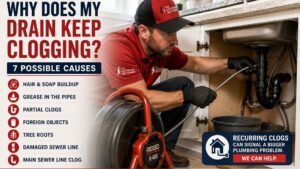
If your drain keeps clogging, the problem may be more than hair or food near the drain opening. Recurring clogs can point to buildup deeper in the pipe or even a problem with your main sewer line.
The key is knowing when you’re dealing with a simple clogged drain and when it’s time to call a plumber.
Here are seven common reasons drains keep clogging and the warning signs Denver homeowners shouldn’t ignore.
1. Hair and Soap Are Building Up
Bathroom drains collect more than water.
Hair, soap, shaving products, toothpaste, and other debris can slowly stick to the inside of the drain pipe.
At first, you may notice that water drains a little slower than normal.
Eventually, the buildup can cause a complete blockage.
You may be able to remove a small clog near the drain opening. But if the same sink, tub, or shower keeps clogging after you clear it, buildup may be farther inside the drain line.
Professional drain cleaning can remove material that basic household methods can’t reach.
2. Grease Is Clogging Your Kitchen Drain
Grease and cooking oil should never go down the kitchen sink.
They may look like liquids when they’re hot, but they can cool and stick to the inside of your pipes.
Food particles then stick to the grease.
Over time, the opening inside the pipe becomes smaller and smaller until water can no longer flow freely.
Common warning signs include:
- A slow kitchen sink
- Gurgling sounds
- Bad odors
- Water backing up into the other side of the sink
- A garbage disposal that drains slowly
- Clogs that keep returning
Avoid pouring grease, fats, and cooking oil down the drain.
If buildup is already inside the pipe, a professional drain cleaning service may be needed to fully clear it.
3. You’re Only Clearing Part of the Clog
This is one of the biggest reasons a drain keeps clogging.
Some DIY methods create a small opening through the blockage without actually removing it.
Water starts flowing again, so the problem appears to be fixed.
But debris is still coating the pipe.
Hair, grease, soap, and other material quickly begin collecting again. Before long, you’re dealing with another clogged drain.
Recurring clogs are a good sign that the entire blockage needs to be removed instead of temporarily opened.
A plumber can determine whether the drain needs snaking, professional cleaning, or another solution.
4. Something Is Stuck in the Drain
Sometimes the problem isn’t buildup.
It’s an object.
Common items that can cause plumbing clogs include:
- Wipes
- Paper towels
- Feminine hygiene products
- Cotton swabs
- Dental floss
- Small toys
- Excess toilet paper
- Food waste
One important rule:
Don’t assume something is flushable just because the package says it is.
Toilet paper is designed to break apart quickly in water. Many wipes and other products don’t break down the same way.
They can collect inside pipes and contribute to stubborn drain and sewer clogs.
If an object is lodged farther down the plumbing system, professional equipment may be needed to remove it.
5. Tree Roots Have Entered the Sewer Line
Sometimes the problem isn’t inside your house at all.
It’s underground.
Your home’s main sewer line carries wastewater away from the property. If that pipe develops a crack or failing joint, tree roots can find their way inside.
Once inside, roots can continue growing and collect toilet paper and other debris.
Signs of a possible sewer line problem include:
- Recurring drain clogs
- Multiple slow drains
- Gurgling toilets
- Sewage odors
- Water backing up into tubs or showers
- Sewer backups
Older sewer lines can be especially vulnerable depending on the pipe material and condition.
If clogs keep returning even after the line has been cleared, a sewer camera inspection may help identify what’s actually happening underground.
6. Your Sewer Line Is Damaged
Tree roots aren’t the only thing that can damage a sewer line.
A sewer pipe can develop problems from age, soil movement, corrosion, poor installation, or other conditions.
The pipe may become:
- Cracked
- Collapsed
- Misaligned
- Corroded
- Partially blocked
A damaged pipe can prevent wastewater from moving freely through the system.
That’s why repeatedly clearing a sewer line isn’t always the answer.
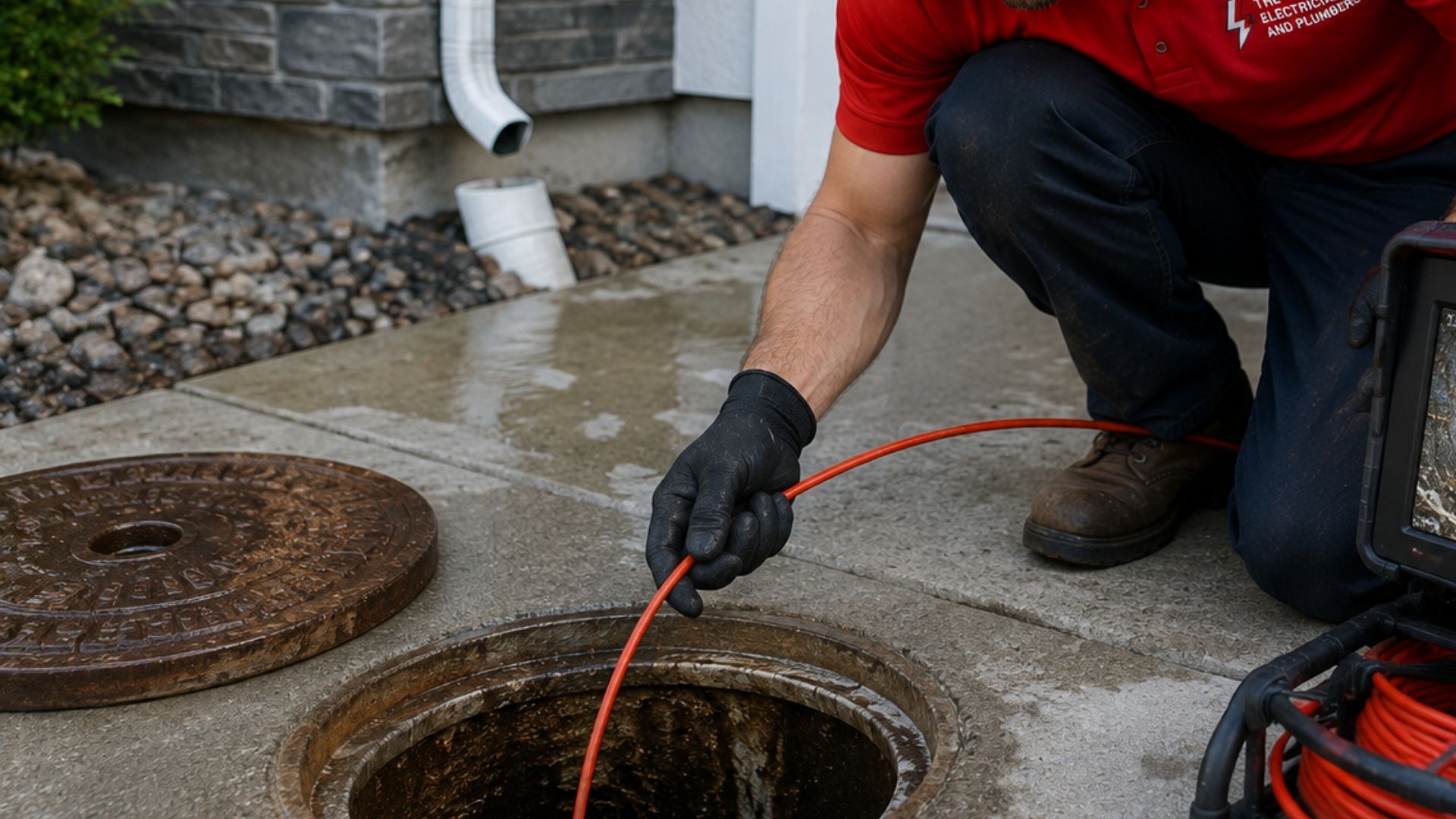
If the clog keeps coming back, the next step may be to inspect the pipe itself.
A sewer camera allows a plumber to look inside the line and identify damaged sections, heavy buildup, roots, or other obstructions.
That can help determine whether you need cleaning or sewer line repair.
7. Your Main Sewer Line Is Clogged
This is the problem homeowners really need to recognize.
One clogged sink usually points to a problem with that specific drain.
Multiple clogged drains can point to the main sewer line.
Your main sewer line carries wastewater from toilets, showers, tubs, sinks, washing machines, and other fixtures out of your home.
When that line becomes blocked, wastewater may start backing up through the lowest available drain.
Warning signs can include:
- Several drains slowing down at once
- Toilets bubbling or gurgling
- Water backing up into a bathtub
- Floor drains overflowing
- Sewage odors
- A toilet affecting another drain when flushed
If you notice several of these symptoms together, stop using water.
Running the dishwasher, washing machine, shower, or additional faucets can send more wastewater toward the blockage.
Eventually, that water may come back into the home.
One Clogged Drain vs. a Sewer Line Problem
A simple way to judge the problem is to look at how many fixtures are affected.
The more fixtures involved, the more likely the problem is farther down your plumbing system.
Why You Shouldn’t Keep Using Chemical Drain Cleaners
When a drain won’t move, grabbing a bottle of chemical drain cleaner is tempting.
But it isn’t always the best solution.
Chemical cleaners may not remove the entire blockage, especially when you’re dealing with:
- Heavy grease
- Large obstructions
- Tree roots
- Damaged pipes
- Main sewer line clogs
Repeated use of harsh chemicals may also be hard on some plumbing materials.
More importantly, pouring chemicals into the drain doesn’t tell you why the clog keeps coming back.
Recurring problems need a diagnosis, not another temporary fix.
Drain Snaking vs. Hydro Jetting
Professional plumbers have different ways to clear drain and sewer lines.
Drain Snaking
A drain snake uses a cable to break through or remove a blockage.
It can be effective for many common clogs, including hair and other obstructions.
Hydro Jetting
Hydro jetting uses high-pressure water to clean buildup from inside the pipe.
Rather than simply creating a path through the clog, it can remove grease, sludge, and other material from the pipe walls.
Not every plumbing system is a good candidate for hydro jetting.
Older or damaged pipes should be evaluated first. A plumber may recommend a sewer camera inspection before deciding which cleaning method makes sense.
When Do You Need a Sewer Camera Inspection?
If a clog happens once, you probably don’t need to immediately inspect your entire sewer line.
If it keeps happening, that’s different.
A sewer camera inspection may be worth considering when:
- The same clog repeatedly returns
- Multiple drains are affected
- You’ve had previous sewer backups
- Tree roots are suspected
- Drain cleaning provides only temporary relief
- You’re considering sewer line repair
A camera can help locate the problem and show what’s happening inside the pipe.
That means less guessing.
Is a Clogged Drain an Emergency?
Usually, one clogged drain isn’t a plumbing emergency.
You can often stop using that fixture and schedule service.
It becomes more urgent when:
- Sewage is backing up into your home
- Multiple fixtures are affected
- Toilets are overflowing
- You can’t use essential plumbing
- Wastewater is spreading across floors
- The problem is getting worse quickly
If sewage is entering the home, stop using water and call a plumber.
How to Help Prevent Clogged Drains
A few habits can reduce the chance of future clogs.
In the Kitchen
Don’t put grease, cooking oil, or large amounts of food down the drain.
Use a sink strainer to catch food particles.
In the Bathroom
Use drain screens to catch hair before it enters the plumbing.
At the Toilet
Flush only toilet paper and human waste.
Keep wipes, paper towels, hygiene products, and other materials out of the toilet.
Don’t Ignore Slow Drains
A slow drain is often an early warning sign.
Addressing it before the line becomes completely blocked can help prevent a larger plumbing problem.
Frequently Asked Questions About Clogged Drains
Why does my drain keep clogging?
Recurring clogs can be caused by hair, soap, grease, foreign objects, buildup deeper inside the pipe, tree roots, or a damaged sewer line. If the same drain keeps clogging after being cleared, have a plumber inspect it.
Why are multiple drains clogged at once?
Multiple clogged drains can indicate a blockage in the main sewer line. Watch for gurgling toilets, slow drains throughout the house, and water backing up through tubs or floor drains.
How do I know if my main sewer line is clogged?
Common signs include several slow drains, toilets that bubble or gurgle, sewage odors, and wastewater backing up into tubs, showers, or floor drains.
Can tree roots clog a sewer line?
Yes. Roots can enter through cracks or joints in underground sewer pipes. They can grow inside the line and collect debris, eventually restricting wastewater flow.
Is hydro jetting better than snaking?
It depends on the clog and condition of the pipe. Snaking can remove many common blockages. Hydro jetting can clean heavy buildup from the inside of a pipe. A plumber can determine which method is appropriate.
Should I get a sewer camera inspection?
A sewer camera inspection can be useful when clogs repeatedly return, several drains are affected, tree roots are suspected, or previous drain cleaning hasn’t solved the problem.
Need Drain Cleaning in Denver?
If your drain keeps clogging, don’t keep treating the symptom.
Find out why it’s happening.
The Electricians and Plumbers provides professional drain cleaning and plumbing service in Denver and surrounding Colorado communities.
Whether you’re dealing with a stubborn kitchen drain, recurring bathroom clogs, or signs of a main sewer line problem, our team can diagnose the issue and recommend the right solution.
Call The Electricians and Plumbers at 720-303-0150 to schedule plumbing service.
Related Posts
If you enjoyed reading this, then please explore our other articles below:

Electrical Panels in Colorado Homes
Many homes across Colorado, especially in Denver, Aurora, Lakewood, and Colorado Springs, were built with electrical panels that were never designed for modern power demands. Cold winters, EV charging, home offices, and newer appliances place added stress on older panels and breakers.
If you are noticing frequent breaker trips, buzzing sounds, or planning an upgrade like an EV charger or heat pump, a licensed Colorado electrician can evaluate whether your panel needs repairs or a full power upgrade.