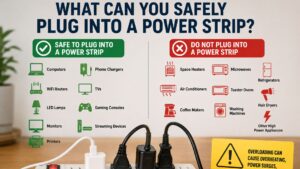
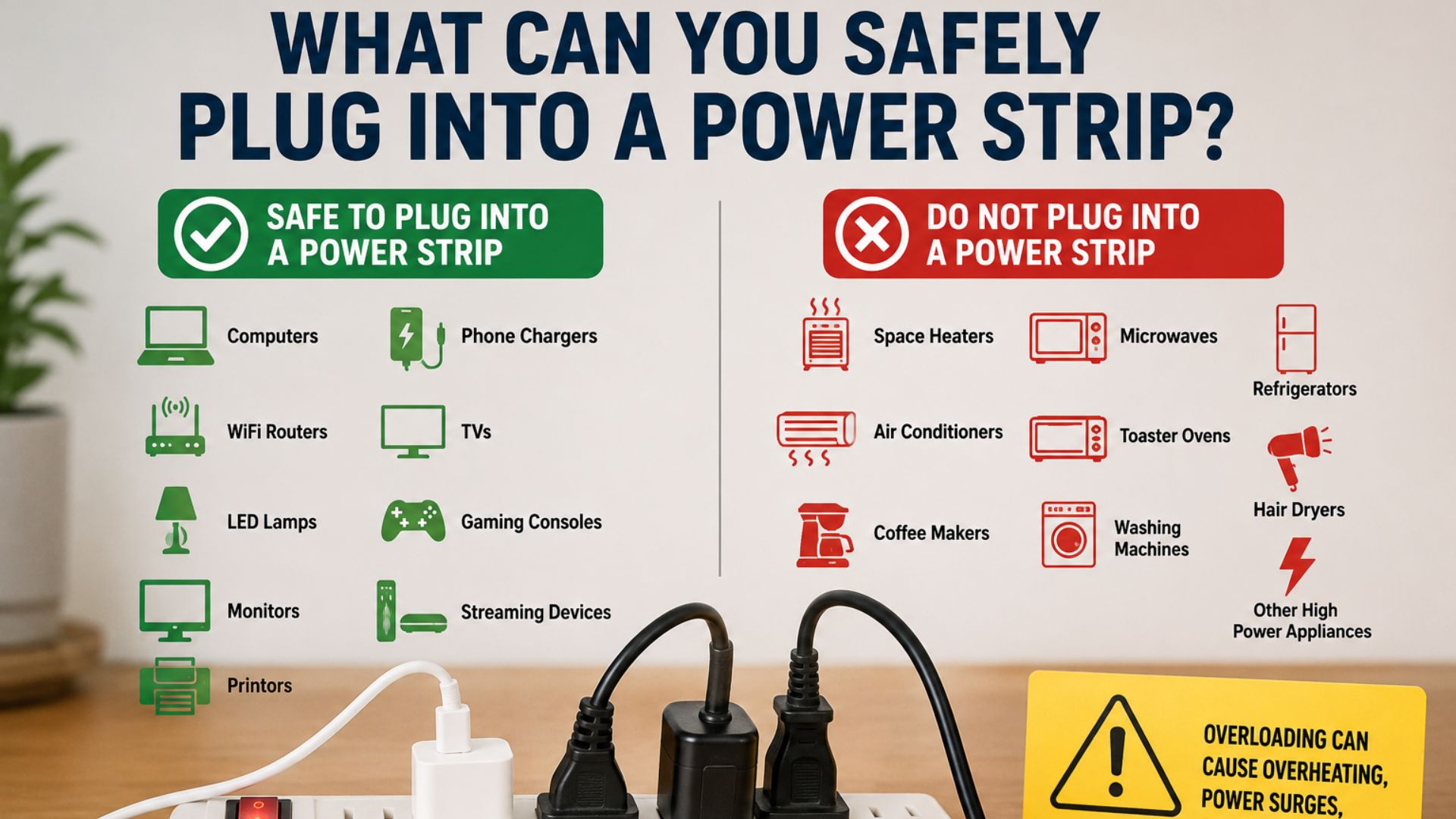
What can you safely plug into a power strip? In most homes, power strips are best for low power electronics such as computers, monitors, TVs, phone chargers, WiFi routers, gaming systems, and LED lamps.
High power appliances are different. Space heaters, portable air conditioners, microwaves, refrigerators, hair dryers, and other high wattage devices should usually plug directly into a wall outlet.
The simple rule for power strip safety is this:
Use power strips for electronics, not high power appliances or heating equipment.
Here is how to tell the difference.
What to Plug Into a Power Strip
These devices are generally safe to use with a properly rated power strip:
- Computers and monitors
- Laptop chargers
- Phone and tablet chargers
- TVs
- WiFi routers and modems
- Streaming devices
- Video game consoles
- LED desk and table lamps
- Small home office electronics
Always check the power strip rating and the instructions for your electrical equipment.
A strip with several open outlets does not mean you can safely fill every outlet. What matters is the total amount of power being used.
Quick Power Strip Safety Guide
| Usually Safe | Plug Into the Wall |
|---|---|
| Computers | Space heaters |
| Monitors | Portable air conditioners |
| Phone chargers | Refrigerators |
| TVs | Microwaves |
| WiFi routers | Toasters |
| Gaming consoles | Toaster ovens |
| LED lamps | Hair dryers |
| Streaming devices | Large kitchen appliances |
If you are unsure about a specific appliance, our guide to things you should never plug into a power strip covers the most common high power devices.
Why Are Some Devices Safe?
A power strip gives you more places to plug things in. It does not give the electrical circuit more power.
That is an important part of power strip safety.
Small electronics usually draw a limited amount of power. A phone charger, router, or LED lamp uses far less electricity than a space heater or microwave.
High power appliances can overload the circuit or the strip itself. That can create excess heat and increase fire hazards.
A circuit breaker may shut off power when a circuit becomes overloaded. However, you should not depend on the circuit breaker as your only form of protection.
Power Strips and Surge Protectors Are Different
Power strips and surge protectors can look almost identical, but they do different jobs.
A basic power strip adds more outlets.
A surge protector adds outlets and includes surge protection designed to help protect connected electronics from certain power surges.
This makes a surge protected device a good choice for electronics such as:
- TVs
- Computers
- Gaming systems
- Home office equipment
- Entertainment systems
However, a surge protector does not give you more electrical capacity.
The same rules apply whether you are using power strips or surge protectors. Do not plug in a high power appliance simply because the strip includes surge protection.
What Should You Not Plug Into a Power Strip?
Some appliances use too much electricity for normal power strip use.
Space Heaters
Space heaters can use around 1,500 watts on their highest setting. That is a large amount of power for one appliance.
Many manufacturers instruct users to connect a space heater directly to a wall outlet.
Avoid using space heaters with power strips or extension cords unless the manufacturer specifically says the setup is allowed.
Portable Air Conditioners
Portable air conditioners can draw a large amount of electricity, especially when the compressor starts.
They should generally be connected directly to a suitable wall outlet.
If your circuit breaker trips when the air conditioner starts, do not keep resetting it. You may be trying to overload the circuit.
Microwaves and Toaster Ovens
Microwaves, toaster ovens, and similar kitchen appliances create heat and can use a lot of power.
These appliances are better suited for a proper wall outlet. Some may also need a dedicated circuit depending on the appliance and electrical code requirements.
Refrigerators and Freezers
Refrigerators and freezers should generally use an appropriate wall receptacle instead of a power strip.
Their compressors can draw extra power when they start. There is also a practical problem. If someone accidentally switches off the strip, the refrigerator loses power.
Hair Dryers
Hair dryers are another high wattage device.
They can draw much more electricity than a phone charger or other small bathroom device. Plug them into an appropriate bathroom outlet and follow the manufacturer’s instructions.
Can You Plug One Power Strip Into Another?
No. Avoid daisy chaining power strips.
Daisy chaining means plugging one power strip into another to create more outlets.
It does not create more electrical capacity. Instead, it makes it easier to connect too much electrical equipment to one power source.
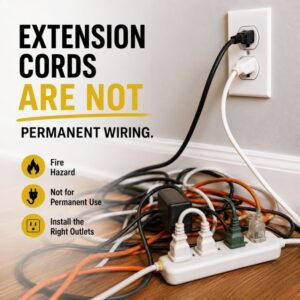
The same concern applies to connecting power strips and extension cords together.
If you regularly need several strips or extension cords in one area, consider having more electrical outlets installed.
How Do You Know if a Power Strip Is Overloaded?
Stop using a power strip if you notice:
- A hot cord or plug
- A burning smell
- Melted or discolored plastic
- Buzzing or crackling sounds
- Loose connections
- Burn marks
- Power cutting in and out
- A circuit breaker that keeps tripping
These signs can point to damaged equipment or too much electrical load.
Do not ignore them. An overheated strip can become a fire hazard.
How Much Can You Plug Into a Power Strip?
Check the label on the power strip.
Many household strips are rated for 15 amps at 120 volts, but you should always use the rating printed on your specific product.
The key is the amount of power all connected devices use together.
For example, several phone chargers, a computer monitor, and an LED lamp may use relatively little electricity.
One space heater can use far more.
This is why counting plugs is not enough. Six small electronic devices can place less demand on a circuit than one high wattage appliance.
How to Use a Power Strip Safely
Follow a few basic safety standards whenever you use power strips or surge protectors.
Check the rating. Never exceed the electrical rating printed on the strip.
Use quality products. Look for power strips that meet recognized safety standards.
Keep strips dry. Do not use indoor power strips near water or as outdoor power sources.
Do not cover them. Avoid placing strips under rugs, bedding, or materials that can trap heat.
Check for damage. Replace strips with cracked cords, loose outlets, burn marks, or melted plastic.
Keep the ground intact. Never remove a grounding pin to force a three prong plug into an older outlet. Proper grounding, including the grounding wire in the home’s electrical system, is an important safety feature.
Avoid daisy chaining. Do not connect multiple power strips together to gain more outlets.
When Power Strips Mean You Need More Outlets
Using a power strip behind a computer desk is normal.
Using power strips and extension cords throughout the house because you do not have enough outlets is different.
This is common in older homes. Many were built before families owned dozens of electronic devices.
Consider having your electrical system checked if you notice:
- Too few outlets
- Frequent breaker trips
- Warm outlets
- Loose plugs
- Flickering lights
- Two prong outlets
- Heavy use of extension cords
- Power strips in nearly every room
Adding properly placed outlets or dedicated circuits can be safer and more convenient than relying on strips as permanent power sources.
A licensed electrician can also check whether your existing circuits and electrical panel can handle your home’s current electrical needs.
Frequently Asked Questions
What can you safely plug into a power strip?
You can generally plug low power electronics into a power strip. Common examples include computers, monitors, phone chargers, TVs, routers, gaming consoles, and LED lamps.
What should you not plug into a power strip?
Avoid using a power strip for space heaters, portable air conditioners, microwaves, refrigerators, hair dryers, toaster ovens, and other high power appliances unless the manufacturer specifically allows it.
Is it safe to plug a TV into a power strip?
Yes. Most TVs can safely use a properly rated power strip. A surge protector may be a better option because it can help protect the TV from certain power surges.
Is it safe to plug a computer into a power strip?
Yes. Computers and monitors are common devices to use with power strips. Consider a surge protector or UPS for additional protection.
Can you plug an extension cord into a power strip?
Avoid connecting extension cords and power strips together. Use each product according to its manufacturer’s instructions and never exceed its electrical rating.
Are power strips or surge protectors better?
It depends on the purpose. A basic power strip adds outlets. A surge protector adds outlets and includes surge protection. For expensive electronics, a surge protector is usually the better choice.
Can a power strip start a fire?
Yes. Damaged or overloaded power strips can overheat and create fire hazards. Replace a strip if the cord, plug, or housing shows signs of heat or physical damage.
The Bottom Line
When deciding what to plug into a power strip, stick with low power electronics.
Computers, monitors, TVs, chargers, routers, gaming systems, and LED lamps are usually good candidates. Space heaters, air conditioners, microwaves, refrigerators, hair dryers, and other high power appliances should generally plug directly into an appropriate wall outlet.
Most importantly, remember that a power strip gives you more outlets, not more power.
If your Denver area home depends on power strips and extension cords because there are not enough outlets, The Electricians can help. We can install additional outlets, add dedicated circuits, troubleshoot overloaded circuits, and check your electrical system for safety concerns.
Related Posts
If you enjoyed reading this, then please explore our other articles below:
Electrical Panels in Colorado Homes
Many homes across Colorado, especially in Denver, Aurora, Lakewood, and Colorado Springs, were built with electrical panels that were never designed for modern power demands. Cold winters, EV charging, home offices, and newer appliances place added stress on older panels and breakers.
If you are noticing frequent breaker trips, buzzing sounds, or planning an upgrade like an EV charger or heat pump, a licensed Colorado electrician can evaluate whether your panel needs repairs or a full power upgrade.