
Contents
You finish decorating your home for the holidays, plug in your Christmas lights, and suddenly everything goes dark.
You check the electrical panel and find a tripped breaker. You reset it, but the lights go out again.
Sound familiar?
Christmas lights tripping breaker problems are common during the holiday season. Too many lights, damaged cords, and wet connections can all cause trouble.
The good news? Many holiday lighting problems have simple explanations. Others need help from a licensed electrician.
Here are seven reasons your Christmas lights keep tripping breaker circuits and what Colorado homeowners should know.
1. Too Many Lights on One Circuit
An overloaded circuit is one of the most common causes of holiday lighting problems.
Most household lighting and outlet circuits use breakers rated for 15 or 20 amps. Each circuit has a limit on how much electricity it can safely carry.
Too many decorations can create an overloaded electrical circuit.
Common warning signs include:
- Lights that flicker or dim
- A breaker that trips when decorations turn on
- Warm outlets or plugs
- A burning smell
What to do: Unplug some decorations and reduce the electrical load. Remember that several outlets may share one circuit.
If your breaker keeps tripping, an electrician can check the wiring and circuit capacity.
Getting your home ready for the holidays? Before plugging in your decorations, check out our Holiday Electrical Safety: 10 Tips for Colorado Homes guide. It covers Christmas light safety, outdoor outlets, extension cords, and other simple ways to protect your family this season.
2. Snow or Moisture Is Tripping Your GFCI
Colorado winters bring snow, ice, and changing temperatures.
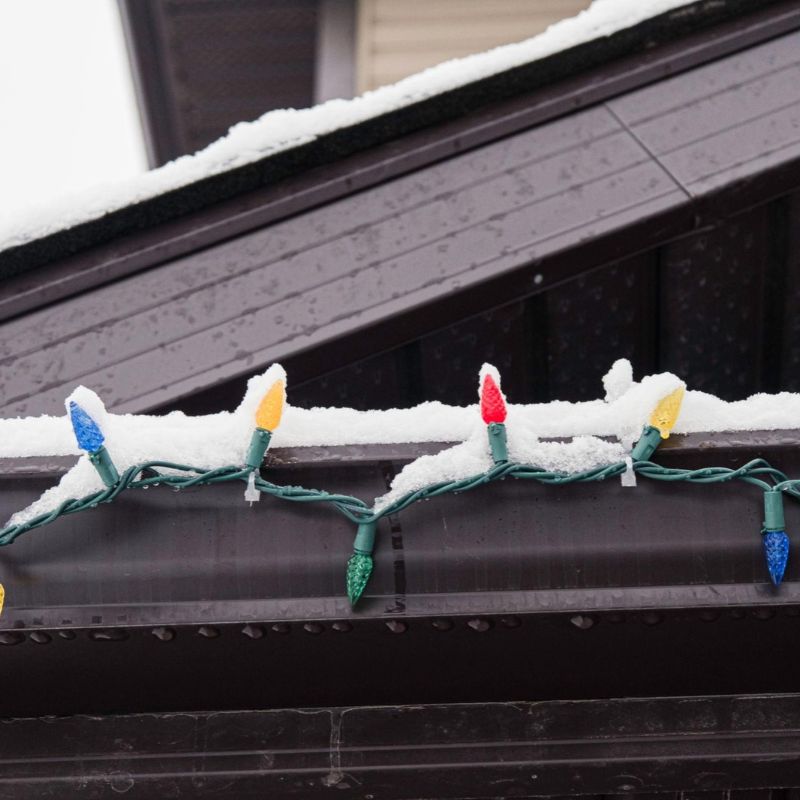
When snow melts, water can reach outdoor electrical connections.
This may explain outdoor Christmas lights tripping GFCI protection after a storm.
A ground fault circuit interrupter (GFCI) helps protect people from electric shock. A GFCI protects you by shutting off power when it detects certain ground faults.
Signs of moisture problems include:
- Lights stop working after snowfall.
- Outdoor GFCI outlets trip during wet weather.
- Decorations work when conditions are dry.
What to do: Disconnect the lights if it’s safe. Check for wet plugs, damaged cords, and exposed connections.
Never bypass GFCI protection to keep your holiday lights running.
3. Damaged Christmas Lights or Extension Cords
Christmas lights can suffer damage during storage.
Mice may chew wires. Plugs can bend. Cold weather and normal wear can damage insulation.
Even a damaged mini light strand can cause electrical problems.
Check for:
- Frayed wires
- Cracked sockets
- Loose connections
- Bent plugs
- Melted plastic
What to do: Replace damaged lights and extension cords. Don’t use electrical tape to cover exposed wiring.
Choose lights tested by a recognized safety laboratory, such as UL or ETL.
4. Too Many Light Strands Connected Together
Connecting several Christmas light strands can make decorating easier.
But every light set has a connection limit.
Connecting too many strands may overload the light string’s wiring, even when the household circuit breaker doesn’t trip.
LED Christmas lights use less power than older incandescent bulbs. However, LED lights still have electrical limits.
What to do: Follow the light manufacturer’s connection instructions. Don’t assume you can connect unlimited strands.
For larger displays, consider adding a properly installed outdoor outlet.
5. The Wrong Extension Cord
Not all extension cords can handle the same electrical load.
An undersized cord can overheat. Damaged cords may cause a short circuit or ground fault.
Avoid these mistakes:
- Using indoor cords outside
- Running cords under rugs
- Connecting multiple extension cords
- Pinching cords in doors or windows
- Using cords with damaged insulation
What to do: Use outdoor-rated cords for outdoor decorations. Choose cords rated for the connected equipment.
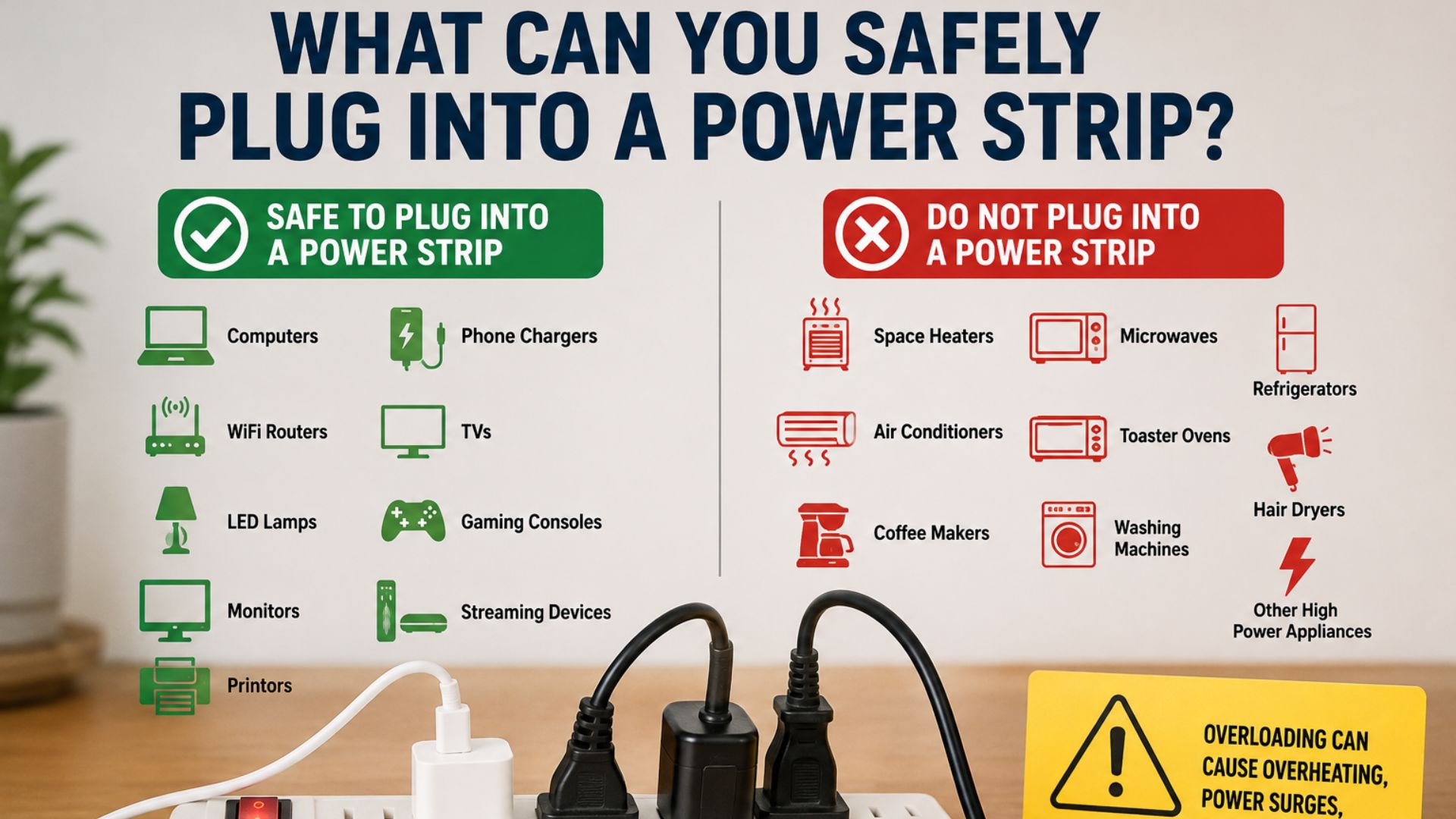
Never plug space heaters into extension cords or power strips. Plug them directly into suitable wall outlets.
6. Problems With Your Electrical Panel
Sometimes, your Christmas lights aren’t the real problem.
A damaged breaker, loose wiring, or another electrical fault may cause repeated trips.
Your electrical system may need professional attention if:
- The breaker trips with decorations unplugged.
- You hear buzzing near the panel.
- Outlets feel hot.
- You notice a burning smell.
- Multiple circuits have problems.
What to do: Stop using the affected circuit and call a licensed electrician.
Never remove an electrical panel cover or attempt to replace a breaker yourself.
7. Other Appliances Share the Circuit
Your Christmas lights may use little power on their own.
But add a space heater, kitchen appliance, or garage equipment, and the total load may exceed the circuit’s limit.
This often happens during holiday gatherings when families use more appliances.
What to do: Reduce the number of devices sharing the circuit. Don’t move high-powered appliances onto power strips.
An electrician can check whether your home needs additional circuits or outlets.
What to Do When Your Christmas Lights Trip a Breaker
Follow these basic safety steps:
- Unplug the decorations. Disconnect the affected lights and other devices if it’s safe.
- Look for damage. Check cords, plugs, and sockets.
- Check for moisture. Keep outdoor connections away from snow and water.
- Check the breaker. If there’s no sign of damage, heat, or fire, you may reset the breaker once after disconnecting the load.
- Call an electrician. If the breaker trips again, leave it off.
Never repeatedly reset the breaker without finding the cause.
If you see smoke, sparks, or fire, stay clear of the equipment. Evacuate and call 911 if there’s a fire.
Frequently Asked Questions
Why do my Christmas lights trip the breaker when it snows?
Melting snow may reach electrical connections and cause a ground fault. This can lead to tripping the GFCI. Disconnect the decorations and inspect them when conditions are safe.
Can LED Christmas lights trip a breaker?
Yes. LED lights use less electricity, but too many lights or other devices can still overload a circuit.
Why does my GFCI keep tripping with outdoor Christmas lights?
Moisture, damaged wiring, or faulty decorations may cause a ground fault. If your outdoor GFCI keeps tripping, don’t bypass it. Have the problem checked.
Should I replace a breaker that keeps tripping?
Not without finding the cause. A breaker may be protecting your home from an electrical fault. A licensed electrician can diagnose the problem.
Keep Your Colorado Home Safe This Holiday Season
Christmas lights electrical problems can interrupt your holiday plans. More importantly, repeated breaker trips may point to a safety issue.
At The Electricians & Plumbers, we help Colorado homeowners find and fix electrical problems.
Our services include electrical troubleshooting, breaker repairs, GFCI outlets, electrical panel upgrades, and outdoor outlet installation.
We proudly serve Denver, Parker, Castle Rock, Colorado Springs, and surrounding communities.
Christmas lights keep tripping your breaker?
Call 720-633-5937 to schedule electrical service.
From our family to yours, have a safe and bright holiday season!
Related Posts
If you enjoyed reading this, then please explore our other articles below:
Electrical Panels in Colorado Homes
Many homes across Colorado, especially in Denver, Aurora, Lakewood, and Colorado Springs, were built with electrical panels that were never designed for modern power demands. Cold winters, EV charging, home offices, and newer appliances place added stress on older panels and breakers.
If you are noticing frequent breaker trips, buzzing sounds, or planning an upgrade like an EV charger or heat pump, a licensed Colorado electrician can evaluate whether your panel needs repairs or a full power upgrade.