Having an insurance claim denied after electrical damage can be frustrating. You pay for homeowners insurance every month. When something goes wrong, you expect that coverage to help pay for the damage.
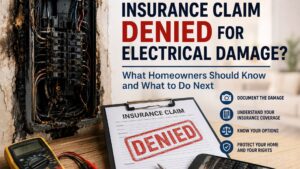
Unfortunately, getting an insurance claim approved isn’t always that simple.
Recent reports about State Farm have put a new spotlight on insurance claim denials. Newly unsealed documents from a lawsuit have raised questions about how the company handled some property claims.
And State Farm isn’t the only insurance company facing questions.
Industry data shows that millions of home insurance claims are closed each year without any payment at all.
So, what can you do if your home has electrical damage and your insurance claim is denied?
The first step is understanding what happened. The next is documenting the damage as well as possible.
What Happened With State Farm Insurance Claims?
In 2026, internal State Farm documents became public as part of a lawsuit involving property insurance claims. (Yahoo Finance)
According to attorneys representing homeowners in the case, State Farm tested a new claims program in Dallas County, Texas. The program focused on wind and hail claims.
It was later expanded across Texas and then nationwide.
Reports about the documents say the program reduced the amount State Farm paid on claims by about $1.4 billion during its first full year.
One internal communication reportedly showed that 39% of claims were closed without payment under the program.
Attorneys involved in the case have also claimed that State Farm calculated savings of more than $15,000 for each claim that was denied or underpaid.
These are serious allegations.
However, it is important to understand that the lawsuit and internal documents do not mean every denied State Farm claim was improper.
State Farm disputes allegations that it intentionally underpaid customers. The company says it reviews claims based on the damage, facts of the loss, insurance coverage, and terms of each policy.
Still, the case has brought more attention to a much larger issue.
State Farm Could Face Millions in Penalties in California
The recently released State Farm documents aren’t the only reason the company’s claims practices are under scrutiny.
In May 2026, the California Department of Insurance took legal action against State Farm following an investigation into claims from the 2025 Los Angeles wildfires.
California regulators reviewed a sample of 220 State Farm claims. They reported finding 398 violations of state law in 114 of those claims.
That means regulators identified at least one alleged violation in more than half of the claims they reviewed.
According to the California Department of Insurance, the problems included:
- Delays in investigating claims
- Unreasonably low settlement offers and underpaid claims
- Delays in accepting or denying claims
- Problems involving smoke damage claims
- Failure to provide some required written denials
- Repeated changes in adjusters
- Poor communication with policyholders
California Insurance Commissioner Ricardo Lara said the investigation found that State Farm delayed and underpaid claims while creating unnecessary obstacles for some wildfire survivors.
The state has now filed an administrative enforcement action against State Farm.
The potential consequences could be significant.
California is seeking millions of dollars in penalties, which the Department of Insurance says would be the largest penalties it has pursued following a disaster this century.
Under California law, penalties can reach $5,000 for each violation and as much as $10,000 per violation if the conduct is found to be willful. (LA Times)
State Farm could face an even more serious consequence.
Regulators may seek to temporarily suspend State Farm’s authority to write insurance policies in California for up to one year.
State Farm has disputed that its claims handling reflects a company-wide problem and has pointed to the billions of dollars it has already paid to policyholders affected by the fires.
The California case is also separate from the State Farm documents discussed above. However, both have increased scrutiny of how one of the country’s largest insurance companies handles claims.
For homeowners, these cases are another reminder that an insurance claim denial or underpayment doesn’t necessarily have to be the end of the process.
Ask questions. Get the insurance company’s decision in writing. Document the damage to your home. And when electrical damage is involved, have a licensed electrician document the actual condition of the electrical system and the work needed to make it safe again.
State Farm Isn’t the Only Insurance Company Denying Claims
Claims closed without payment are not limited to State Farm.
Weiss Ratings analyzed insurance company filings for 2024. It found that 42.1% of U.S. homeowners claims were closed without payment. (Weiss Ratings)
That was up from about 39% in 2023.
In 2004, the rate was only 25.7%.
The numbers were even higher among some of the country’s largest insurers.
Among 14 large property insurers studied by Weiss Ratings, an average of 48% of claims were closed without payment.
Some examples included:
- Allstate Vehicle & Property Insurance: 50.9%
- Allstate Insurance Company: 49.8%
- United Services Automobile Association (USAA): 49.5%
- USAA Casualty Insurance: 48.7%
- Farmers Property & Casualty Insurance: 45.6%
- State Farm Lloyds: 41.6%
A claim being closed without payment does not automatically mean the insurance company acted improperly.
There are legitimate reasons an insurer may not pay a claim. The damage may not be covered. The repair cost could be below the deductible. The loss may fall under a policy exclusion.
Normal wear and tear is another common issue. Home insurance is generally intended to cover sudden losses rather than the long-term deterioration of a home’s equipment.
But the increase in claims that end without payment is something homeowners should know about.
It also shows why documenting damage to your home is so important.
Does Homeowners Insurance Cover Electrical Damage?
Sometimes.
Whether homeowners insurance covers damage to electrical systems usually depends on what caused the problem and the terms of your policy.
A standard home insurance policy may provide coverage when electrical damage results from a covered event.
Examples can include:
- Electrical fires
- Lightning strikes
- Storm damage
- Certain power surges
- Damage involving a fallen power line
- Damage caused by another covered loss
- Fire damage to wiring or electrical equipment
A covered event can also cause more than electrical damage. A fire, for example, could result in smoke damage or water damage from firefighting efforts.
Depending on the policy and loss, homeowners insurance may cover repairs to the home and damaged belongings. Some policies may also provide additional living expenses if a covered loss makes the home temporarily unsafe to occupy.
Every policy is different. Don’t assume your insurance covers a particular type of loss without reviewing your coverage.
Insurance generally works differently when the problem comes from poor maintenance, old equipment, normal wear and tear, or a known electrical problem that was never repaired.
That makes the cause of the electrical damage very important.
Why Electrical Insurance Claims Can Get Complicated
Electrical damage isn’t always easy to see.
Imagine that an electrical panel catches fire.
The outside of the panel might show only a small burned area. Once an electrician opens and inspects the equipment, the damage could be much worse.
There may be:
- Melted breakers
- Burned bus bars
- Damaged conductors
- Overheated connections
- Damaged service equipment
- Heat damage inside the panel
- Damage to nearby wiring
The same problem can happen after a major power surge or electrical fault.
A homeowner may notice that one appliance stopped working. Further testing could reveal damage to other electrical systems or equipment.
This is one reason an insurance company’s first repair estimate may not tell the whole story.
What Should You Do After Electrical Damage?
Safety comes first.
If you smell burning, see smoke, hear arcing, or notice significant damage to your electrical panel, don’t touch the equipment.
For serious electrical fires or an immediate fire hazard, call 911.
Once the property is safe, start documenting what happened.
Take photos and videos of the damaged area before repairs are made when it is safe to do so.
Save damaged equipment when possible. Don’t throw away breakers, electrical devices, or other important evidence until you know whether the insurance company needs to inspect them.
Keep copies of:
- Repair estimates
- Electrician invoices
- Inspection findings
- Photos and videos
- Emails with your insurer
- Your insurance claim paperwork
- The insurance company’s estimates
- Any denial letter you receive
Good records can make it easier to explain exactly what happened and what electrical work is needed to make the home safe again.
Have a Licensed Electrician Document the Damage
An electrical inspection can be especially helpful when an insurance claim involves electrical equipment.
An electrician may be able to document:
- What electrical equipment was damaged
- Where the damage occurred
- Visible signs of overheating or fire
- Damaged breakers or electrical panels
- Burned wiring
- Unsafe electrical conditions
- Equipment that needs to be replaced
- The estimated cost of electrical repairs
Photos can also be important.
For example, pictures showing burned main lugs or damaged bus bars may provide much more information than an estimate that simply says “replace electrical panel.”
Good documentation helps show why the repair is necessary.
It can also help you protect your home by identifying electrical hazards that may not be obvious during a basic insurance inspection.
What If Your Insurance Claim Is Denied?
Don’t assume the first answer is always the final answer.
If your insurance claim is denied, start by asking the insurance company for the decision in writing. If you’ve already received a denial letter, read the explanation carefully.
You want to know exactly why the claim was denied.
Ask which part of your policy the company used to make that decision.
Then compare the denial with the actual damage.
If important electrical damage was missed during the insurance inspection, provide additional documentation.
That could include:
- Electrician’s inspection findings
- Detailed repair estimates
- Photos
- Videos
- Fire department reports
- Equipment information
- Previous maintenance records
- Receipts or invoices
You may also be able to request another inspection or ask the insurer to review additional evidence.
What If the Insurance Company Underpays the Claim?
A claim doesn’t have to be completely denied to create a problem.
Sometimes an insurance company agrees that damage occurred but offers much less than the actual repair will cost.
For example, an estimate may cover replacing a few damaged breakers when an electrician finds that heat damaged the panel’s bus assembly.
Those are very different repairs.
Get a detailed estimate from a licensed electrician showing what needs to be replaced and why.
You can then compare that estimate with the insurance company’s scope of work.
If something important is missing, ask the adjuster about it.
Getting the full electrical system inspected can also provide peace of mind that dangerous damage hasn’t been overlooked.
You Have Options After a Denied Claim
If you still disagree with the insurance company’s decision, there may be other options.
Depending on the situation, you may want to speak with:
- Your insurance agent
- A supervisor at the insurance company
- A licensed public adjuster
- Your state’s insurance regulator
- An attorney who handles insurance disputes
State insurance departments also accept consumer complaints involving insurers.
For Colorado homeowners, insurance complaints can be submitted to the Colorado Division of Insurance.
Large losses may justify getting professional help, especially when there is a major difference between the cost of repairs and what the insurance company is willing to pay.
Don’t Ignore Electrical Damage While Fighting an Insurance Claim
Insurance disputes can take time.
Electrical hazards shouldn’t.
A burned electrical panel, damaged wiring, loose service connection, or overheated breaker can create a serious safety problem.
Don’t continue using unsafe electrical equipment simply because you’re waiting for an insurance decision.
Ask your electrician what needs to be shut down immediately and what can safely remain in service.
Taking care of dangerous electrical problems now can help protect your home from more serious damage over the long term.
Electrical Damage in Colorado? Get It Properly Documented
If your Denver-area home has suffered an electrical fire, power surge, damaged electrical panel, burned wiring, or another major electrical problem, The Electricians can inspect the electrical system and determine what repairs are needed.
Our electricians can document visible electrical damage, identify unsafe equipment, take photos when appropriate, and provide a detailed estimate for necessary electrical work.
That documentation may also help you better understand the difference between the actual electrical damage and what appears on an insurance estimate.
Have electrical damage after a fire, storm, surge, or other loss?
Contact The Electricians to schedule an electrical inspection.
The Electricians is an electrical contractor, not an insurance company, public adjuster, or law firm. We cannot determine whether an insurance policy covers a loss or provide legal advice. Coverage decisions are made by your insurance company according to your policy.
Related Posts
If you enjoyed reading this, then please explore our other articles below:
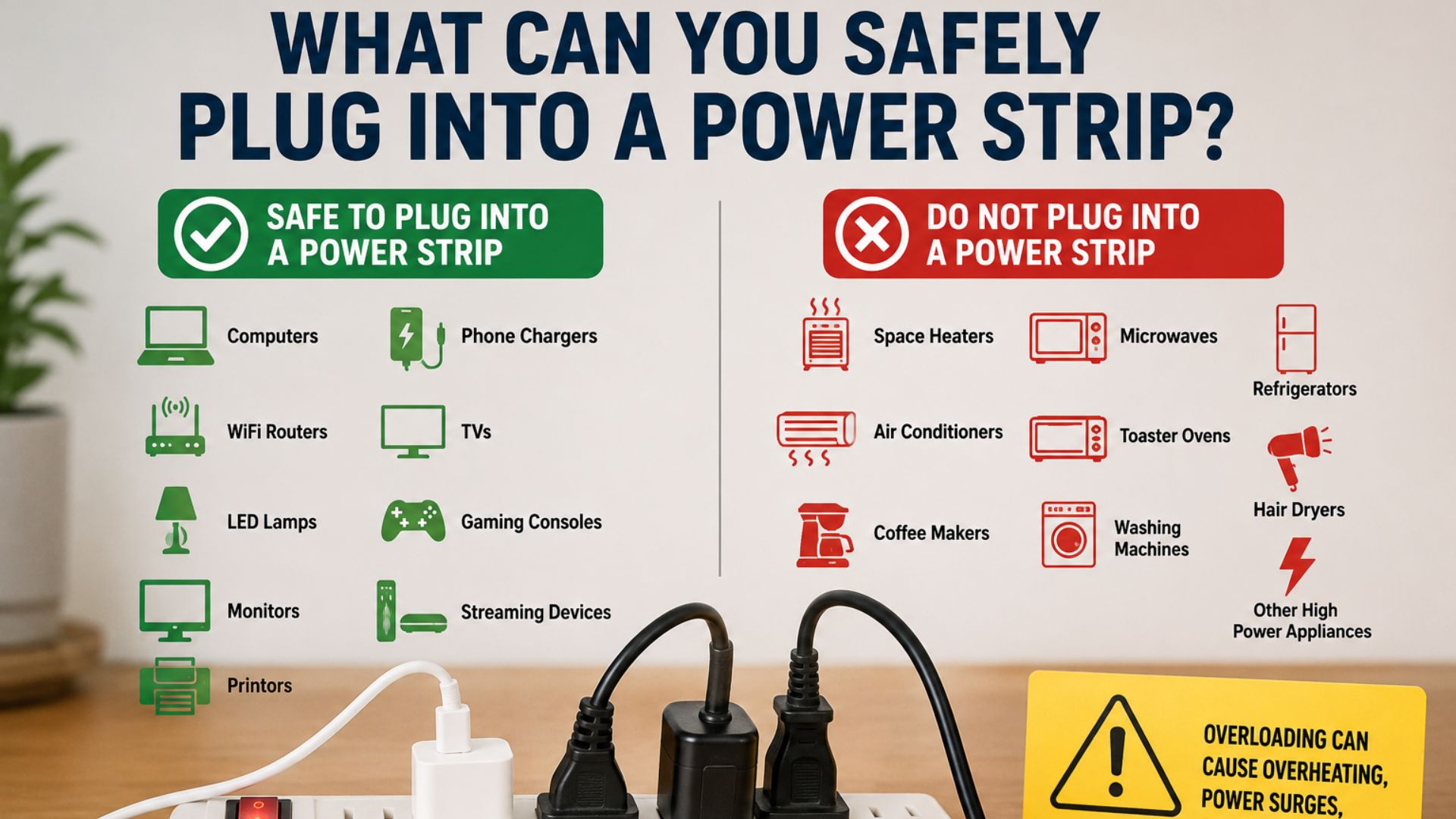
Electrical Panels in Colorado Homes
Many homes across Colorado, especially in Denver, Aurora, Lakewood, and Colorado Springs, were built with electrical panels that were never designed for modern power demands. Cold winters, EV charging, home offices, and newer appliances place added stress on older panels and breakers.
If you are noticing frequent breaker trips, buzzing sounds, or planning an upgrade like an EV charger or heat pump, a licensed Colorado electrician can evaluate whether your panel needs repairs or a full power upgrade.